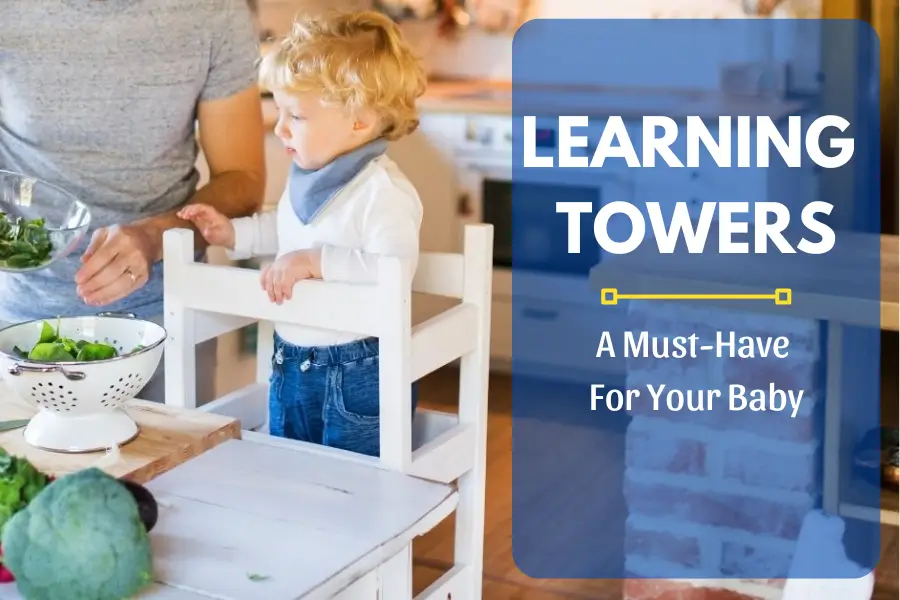
When children are in the toddler phase, keeping them safe while still allowing them to explore things can be challenging. Learning tower will be your lifesaver! Traditional step stools or chairs can pose falling risks to your kids. Then, the learning tower is a specially designed tool that will provide a stable platform to support toddlers with safe climbing and standing.
If you don’t have a learning tower, you should read our article. You will know what learning tower is, why you need to have one, and some safety precautions you need to consider when letting your kids use it.
What Is Learning Tower?
Best learning towers are specially designed step stools for children to easily access counter height and are usually made of wood or sturdy plastic. They have a safety rail, stairs, and a stable base so that the children can climb up and explore things. Learning towers for toddlers often can be adjusted to fit kids of different ages and sizes.
A learning toddler tower is also known as a Montessori tower. It is inspired by the teaching method of Montessori which encourages children to learn and discover things surrounding them.
Amanda Gummer, Ph.D. in neuropsychology and the founder of The Good Toy Guide said:
In a busy kitchen, a learning tower can help children safely access the work surfaces and feel more on the level with adults, which is good for confidence.
Related: Goddard vs Montessori: Which Is Better For Your Child?
Tips to Pick Up Suitable Learning Tower
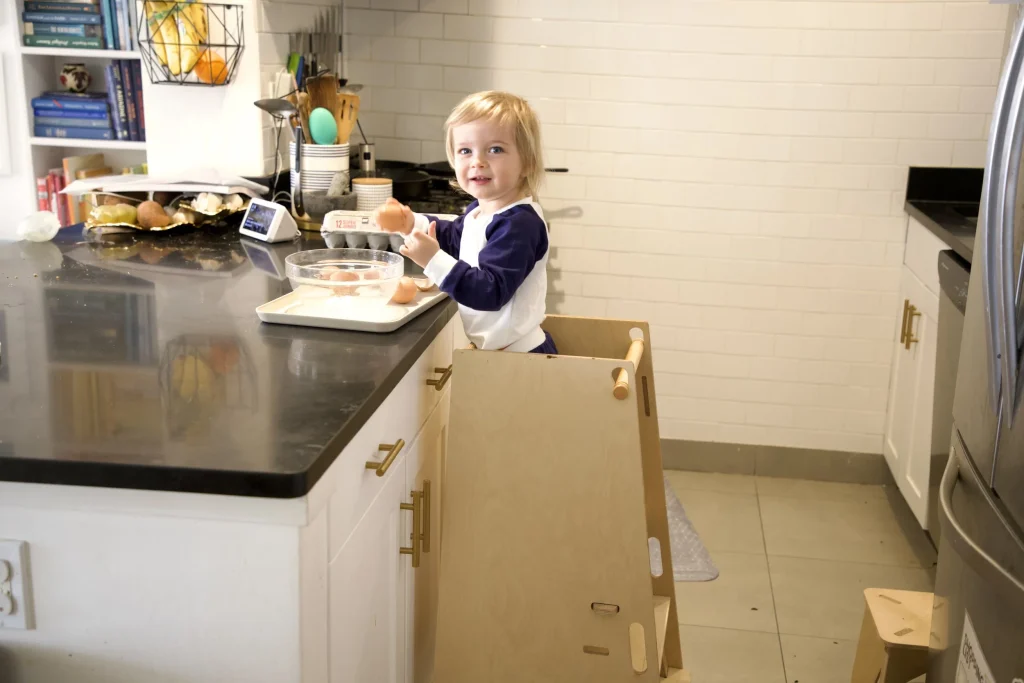
You can see that there are many kinds of learning towers for toddlers on the market. That can make you confused and don’t know how to choose the right one. Before you decide to buy a learning tower, you can note down below things:
- Adjustable & Foldable: Consider pick-up adjustable and foldable towers. Most of the learning towers can be adjusted the height to fit with specific child’s size. If you don’t have much space in your house, a foldable toddler tower will be a great choice so that you can store it when not in use
- Fit Your Child’s Age: Many towers are manufactured for kids from 18 months, but some for over 2 years.1 So, don’t forget to ask the sellers carefully before buying.
- The Width of The Platform: This is also important if your kids grow bigger, especially when you have 2 kids or twins. If you have 2 kids, they will like to stand on the tower at the same time. Keep in mind that a bigger size means that the tower will be heavier.
- Removable parts: You can consider what can be separated from the tower. You may like a removable panel to have more control over the enclosure around the kids.
- Extra features: Chalkboard or accessories may be some features you want to keep your kid engaged. But keep in mind that more features will mean that the tower will be bigger and take up more space in your house.
- Having Steps: Steps will help children climb on the tower more easily. This is important if your kid has just started learning to walk and needs more support.
- Sturdiness: This is to ensure the safety of your child. A plastic tower can be a little cheaper but a wooden one is likely more stable.
Additional considerations when choosing:
Material matters: Wooden towers tend to be more stable and durable, while plastic options are lighter and easier to move. Wood also blends better with most kitchen aesthetics. However, plastic towers are typically easier to clean and maintain.
Check the guardrail design: Some towers have rails on all four sides, while others leave the front more open. Full enclosure provides better security for younger toddlers, while open-front designs give older children more independence to climb in and out.
Weight capacity: Most learning towers support 150-250 pounds. Higher weight limits mean the tower can be used longer as your child grows, and some are even sturdy enough for adult use as a step stool.
Ideal Age of Kid To Use Learning Towers
Typically, learning toddler towers can be introduced to kids from 18 months to 6 years. With 18-month-old kids, you should use a safety net for any accidental falling. With older toddlers, you can allow them to climb in and out freely because they have better motor skills. Always follow the usage instructions from by manufacturer for age and weights before letting your kids use a learning tower.
Why Does Your Kid Need A Learning Tower?
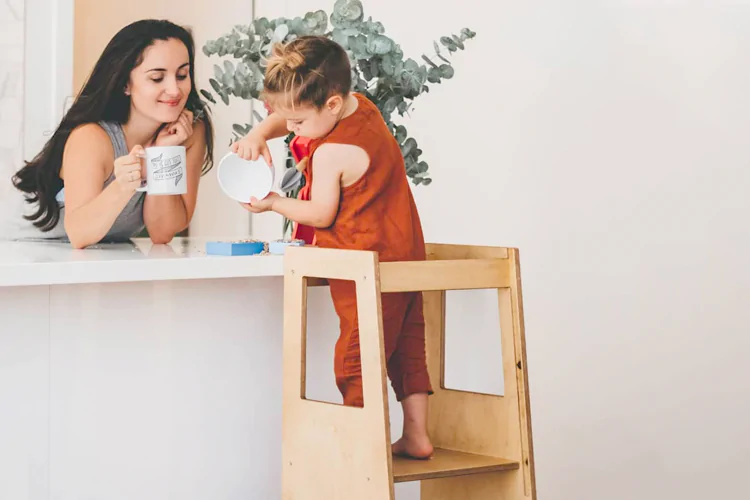
A learning toddler tower is an invaluable tool for toddlers and growing kids. It provides many benefits that support their development and independence. In addition to acting as a step stool, toddler cooking aid, and adaptable kids’ wooden kitchen items, our best learning towers encourage independence and curiosity. Here are some reasons that can persuade you:
- Safety & Accessibility: Offer a secure and stable platform that allows children to reach counter height safely. This minimizes the risk of falls and injuries that can occur when children climb on chairs or traditional stools.
- Encourages Learning & Skills: Enable children to participate in daily activities like cooking, baking, and cleaning. This can help them to develop awareness, and independence as well as explore new things. Children can observe and mimic adults, gaining practical knowledge and understanding of everyday tasks and routines.
- Enhances Bonding: Allows parents and children to spend more time together, creating opportunities for bonding and communication.
- Versatility: You can use a learning tower in various places, such as the kitchen, bathroom, or playroom.
Practical everyday uses:
Beyond just kitchen help, learning towers serve multiple purposes throughout your home. In the bathroom, toddlers can brush their teeth independently and wash their hands without needing to be lifted. During arts and crafts time, the tower brings children to table height for painting, drawing, or playdough activities.
Many parents find that learning towers transform meal prep from a struggle into quality bonding time. Instead of entertaining a fussy toddler while cooking, you can involve them in washing vegetables, stirring ingredients, or simply observing the cooking process. This hands-on participation often makes children more interested in trying new foods they helped prepare.
The tower also supports sensory development as children experience different textures, temperatures, and smells during cooking activities. These multi-sensory experiences are crucial for cognitive development in early childhood.
Safety When Let Your Kid Use Learning Towers

Always keep in mind that “safety first”! Here are some important tips when letting your kid use learning towers:
- Stable Placement: Always place the learning tower on a flat, stable surface to prevent any wobbling or tipping over, especially for a standing platform. If your floor is slippery, you can place the learning tower on a non-slip mat.
- Supervision: Never leave your child unattended while they are using the learning toddler tower. Constant supervision ensures you can quickly address any potential hazards or accidents. For best safety, you can use a safety net.
- Appropriate Age & Weight Limits: Make sure the learning tower is suitable for your child’s age and weight. Follow the manufacturer’s guidelines to ensure the tower can safely support your child.
- Training: Educate your child on how to safely climb in and out of the learning tower. Show them how to hold onto the sides and encourage them to move slowly and carefully.
- Keep Dangerous Items Out of Reach: When your child is using the learning tower, ensure that sharp objects, hot surfaces, and other dangerous items are out of their reach. Clear the surrounding area of any potential risks.
- Regular Inspections: Routinely check the learning toddler tower for any signs of wear and tear. Tighten any loose screws and ensure all parts are in good condition to maintain its stability and safety.
Never let your kids alone with a learning tower. It is not like a car seat, it doesn’t have a belt and the children can fall out. Without supervision, your kid can try to escape or do something risky that you even can’t realize.
Common Questions
When should I stop using a learning tower?
Discontinue use when your child’s belly button reaches above the top guardrails, typically around age 5-6. At this point, they’re tall enough to safely use a regular step stool.
Can learning towers tip over?
Quality learning towers are designed with wide, stable bases to prevent tipping. Always place the tower on flat surfaces and against the counter for extra stability. Avoid placing on rugs or uneven flooring.
How do I clean and maintain a learning tower?
Wipe down wooden towers with a damp cloth and mild soap. Check screws and joints monthly to ensure everything remains tight and secure. For plastic towers, use disinfectant wipes for easy cleaning.
Last Word
Learning towers are an invaluable addition to any household with young children. With this tool, you can let your kids join in your daily activities easily. It facilitates hands-on learning experiences that are essential for the development of children. Moreover, investing in a learning tower can also create cherished moments of togetherness with your dearest child.
Sources
- 18-24 months: toddler development. (2024, March 4). Raising Children Network. https://raisingchildren.net.au/toddlers/development/development-tracker-1-3-years/18-24-months#:~:text=Toddlers%20usually%20walk%20on%20their,of%20your%20toddler’s%20favourite%20things.
↩︎
Last update: 01/24/2026