
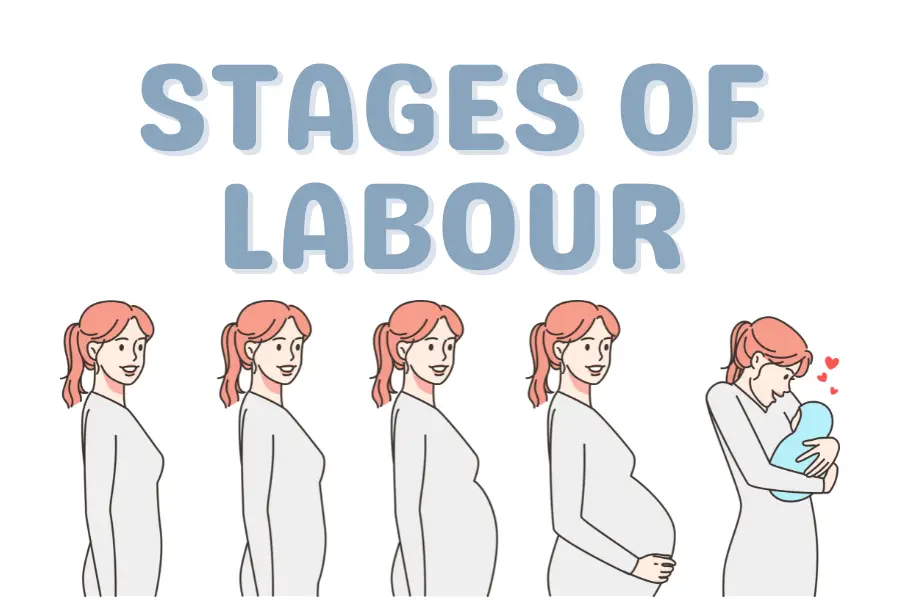
The day that mothers are going to the labour is that the birthday of their baby. It is one of the importatnt milestones of the mother’s life as well as the most remarkable day of your baby because after 9 months, they finally see the world outside mother’s bump. Do mothers know what they will experience on the day you bring a child into this world? In this article, we will tell you what will be going on the day you bring a small life into this world.
Preparing Yourself for the Labour Journey
Understanding what happens during labor is just the beginning. Practical preparation can help you feel more confident and in control when the big day arrives.
Create a birth plan: Discuss your preferences with your healthcare provider ahead of time. This includes your thoughts on pain relief, positions for delivery, who you want present, and immediate postpartum wishes like skin-to-skin contact or delayed cord clamping. Remember that birth plans are flexible guides, not rigid rules, as circumstances may change during labor.
Pack your hospital bag early: Around 36 weeks is a good time to have everything ready. Include comfortable clothing, toiletries, phone charger, snacks for after delivery, and items for your newborn. Don’t forget important documents like your ID, insurance cards, and birth plan copies.
Practice coping techniques: Before labor begins, familiarize yourself with breathing exercises, visualization, and relaxation techniques. Practice these with your birth partner so they can guide you through them during labor. Consider taking childbirth education classes that teach various comfort measures and pain management strategies.
Know your pain relief options: Educate yourself about both medical options like epidurals and natural pain management techniques. Understanding what’s available helps you make informed decisions during labor without feeling pressured or unprepared.
Signs Labour Is Starting
In the final weeks of pregnancy, your body sends several signals that labour is approaching. Recognising these signs early helps you prepare both mentally and practically, and tells you when to call your midwife.
The “show”: A pink, brown, or blood-tinged mucus discharge often appears hours or even days before labour begins. This is the mucus plug that has sealed your cervix throughout pregnancy. Losing it is a strong sign that your cervix is beginning to soften and open. Heavy bleeding is not normal and should be reported to your midwife straight away.
Regular contractions: True labour contractions get stronger, longer, and closer together over time. They do not ease when you walk, lie down, or change position. According to the NHS, once contractions last around 60 seconds each and come every five minutes, you are likely in established labour.
Waters breaking: The amniotic sac may release a sudden gush or a slow trickle of clear or pale yellow fluid. About 1 in 10 women experience this before contractions begin. If your waters are green, brown, or bloody, contact your maternity unit immediately.
Backache and pelvic pressure: A persistent dull ache in the lower back, deep pelvic pressure, or the sensation that the baby has “dropped” lower into your pelvis can all signal that labour is near.
Other early signals: Some mothers report a sudden burst of energy or “nesting” urge, loose stools, mild nausea, or unexplained restlessness in the 24–48 hours before labour begins.
If you experience three or more of these signs together, especially with regular contractions, call your healthcare team. For more detail on early symptoms, see our guide to signs of labour.
Early Labour Phase: What Happens at Home

Most of the early labour phase happens at home, often over several hours and sometimes over a few days for first-time mothers. Knowing what to expect during this stretch helps you stay calm and conserve energy for active labour.
Timing: Early labour begins when contractions become regular and your cervix starts to dilate from 0 to about 6 centimetres. Cleveland Clinic notes that this phase can last 6–12 hours for first births and is usually much shorter for subsequent pregnancies.
What it feels like: Contractions during early labour are typically 5–20 minutes apart and last around 30–45 seconds each. The sensation is often described as strong menstrual cramps or tight pressure that builds, peaks, and fades. Between contractions, you should still feel comfortable enough to talk, eat, or walk around.
What to do at home:
- Stay upright and gently active — walking helps the baby move down into the pelvis.
- Eat light, easily digestible foods and sip water often to keep your energy up.
- Take a warm shower or bath to ease discomfort.
- Try breathing exercises or listen to calming music.
- Rest between contractions, especially if labour starts at night.
Track your contractions: Use a contraction-timing app or note start time and duration for an hour. Once contractions reach the 5-1-1 pattern (every 5 minutes, lasting 1 minute, for at least 1 hour), it is time to head to your birth location.
Early labour can feel emotionally intense even before it becomes physically demanding. Lean on your birth partner, rest when you can, and remember that this stage rarely lasts as long as it feels in the moment.
When to Contact Your Midwife or Go to Hospital

Knowing exactly when to call your midwife or go to the hospital can be one of the hardest parts of labour. The right timing depends on your pregnancy history, distance to the birth location, and what your healthcare team has advised.
Call your midwife or labour ward straight away if:
- Contractions come every 5 minutes, each lasting around 60 seconds, for at least an hour (the 5-1-1 rule).
- Your waters break — even if contractions have not yet started.
- You experience any bleeding heavier than a light show.
- You notice reduced or absent baby movements.
- You have severe headache, sudden swelling, blurred vision, or upper abdominal pain — possible signs of pre-eclampsia.
- Your amniotic fluid is green or brown, which can indicate meconium and needs urgent assessment.
- You have a high fever or feel unwell.
Go to the hospital when:
- You are in active labour (contractions every 3–5 minutes, strong enough that you cannot talk through them).
- Your waters have broken and your team has advised you to come in.
- You have a planned caesarean or an induction appointment.
- You have a history of fast labours, or live more than 30 minutes from your birth location — leave earlier than the 5-1-1 rule suggests.
If you are unsure, call. According to the American College of Obstetricians and Gynecologists, uncertainty about timing is one of the most common reasons women contact their provider in late pregnancy, and the team is prepared to guide you over the phone. Your maternity unit would much rather assess you and send you home than have you wait too long.
Pack your hospital bag by week 36 so you are not scrambling in the moment. Keep your maternity notes, insurance card, ID, and birth plan in one accessible place. Plan two driving routes in case of traffic, and never drive yourself in active labour. For a complete list of what to bring, see our hospital bag packing checklist.
The First Stage Of Labour: Established Labour
The first stage could be the longest stage and persist between 12 and 19 hours1. With the subsequent deliveries, women may go through this stage faster. This stage is divided into two periods: one is early labour and active labour.
Early Labour

Early labor persists between 6 and 12 hours; with first pregnancy, the early labour may last hours until days. And this period is shorter for next deliveries. Though latent labour usually occurs at home, mothers need to prepare to go to the hospital anytime. There are some signs when mothers are in early labour:
- Contractions happen 5 to 20 minutes intervals2. They last about a minute each. If contractions are just five minutes apart and last one hour or more, mothers need to meet the doctor to be ready to give birth.
- Mothers see a clear, slight pink or bloody discharge from the vagina. And mothers should be careful of heavy bleeding.
- The cervix opens to around 4 to 6 centimeters.
Sometimes, mothers get contractions, it does not mean mothers go into labor. It is probably “false labour” or known as Braxton Hick contractions.
Mothers may feel uneven contractions in many hours or even in several days before they officially labour. Contractions in this period will rise gradually from discomfort to pain. And it does not have how many contractions mothers get exactly and how long they persist.
Before labour starts, mothers should eat and drink to have energy for the next stage. If the labour starts in the daylight, mothers should stay upright and move slightly. This will help the cervix open and the baby turn down into the pelvis. If the labour begins at night, pregnant women try to sleep if they have a chance and be relaxed. To ease the pain during this stage of labour, mothers should:
- Change positions
- Do some breathing exercises
- Listen to relaxing music
- Take a warm bath or shower
- Massage
- Use breathing or relaxation techniques
Active Labour

Active labour is when the cervix dilates from 6 to 10 centimeters and usually lasts from 4 to 8 hours. The cervix will open at around 1 centimeter per hour. The contractions will be stronger, closer and even intervals. Mothers might be cramping in their legs and feel like vomiting. Moreover, they will feel the heavy pressure in the back and breaking of water even if it has not happened yet. At that time, mothers should go to the hospital to deliver a baby in the next stage.
During this stage, the discomfort will increase; so if mothers are in pain, let them ask for anesthesia to drink. If you do not want to use any kind of relief medication or use more than usual, mothers discuss with the pregnant team to make the best selection for mothers as well as babies.
In this active labour stage, mothers may suffer other discomfort such as
- Contractions are stronger and more even, approximately 3 minutes apart.
- Feel the baby start moving into the birth canal.
- Cramping, pain or pressure in the legs or lower back and want to push.
- Water could break in active labor (the amniotic sac around your baby leaks)
During the first stage of labour, the doctor or midwife will monitor the baby to ensure that both mothers and babies are still fine. If mothers and babies do not have strange signs of labour to be observed closely, mothers should take a walk to make you feel more comfortable. Meanwhile, the care provider will use a fetal heartbeat stethoscope to listen to the heartbeat of the baby every 15 minutes.
In contrast, if pregnancy care providers are concerned about mothers and babies or an epidural, they will recommend using electronic monitoring. Electronic monitoring has 2 pads to stick to the mother’s bump. One is to follow the contractions of the mother and the other is used to follow the heartbeat of the baby. These pads are connected to a monitor that demonstrates the heartbeat of the baby in the bump and the contractions. Sometimes, the midwife uses a foetal scalp electrode and attaches it to the head of the baby. This heart monitor can bring a more correct measurement of the heartbeat of a baby.
You can ask to be monitored electronically even if there are no concerns. Having electronic monitoring can sometimes restrict how much you can move around. Your midwife can discuss this with you.
In some cases, labour probably is slower than expected. The reason why it is slower is because contractions are not strong and regular enough or the baby is in a hard position. Therefore, to speed up labour, care providers will do labour induction.
Pain Relief Options During Labour

Pain relief during labour is a personal choice, and there is no single right approach. Understanding all your options ahead of time means you can make informed decisions without feeling pressured in the moment.
Drug-free comfort measures: Many women find significant relief from non-medical techniques, especially during early labour.
- Position changes and movement — walking, swaying, or kneeling on all fours can ease back pain and help labour progress.
- Water immersion — a warm bath or birthing pool reduces contraction pain and relaxes pelvic muscles. A Cochrane review found water immersion in the first stage lowers epidural use without increasing risk.
- Breathing techniques and visualisation — slow, controlled breathing keeps oxygen flowing to you and your baby and helps you stay focused between contractions.
- Massage and counterpressure — firm pressure on the lower back can dramatically reduce the intensity of back labour.
- TENS machine — a small device that delivers mild electrical pulses to the lower back, useful in early labour at home.
Inhaled gas and air (Entonox): A 50/50 mix of oxygen and nitrous oxide breathed through a mouthpiece during contractions. It takes the edge off without numbing you, wears off in minutes, and does not affect the baby. Widely available in UK hospitals and birth centres.
Pethidine or diamorphine injections: Opioid injections that ease pain and help you relax. They can cause drowsiness or nausea and should be given several hours before delivery so they wear off before the baby is born.
Epidural anaesthesia: The most effective pharmacological pain relief. A small catheter placed in the lower back delivers local anaesthetic that numbs you from the waist down. Epidurals work in about 5–15 minutes and can be topped up as needed. Possible side effects include lowered blood pressure, a longer pushing stage, and limited mobility. The American College of Obstetricians and Gynecologists outlines the full risk-benefit profile.
Spinal block: Similar to an epidural but a single injection rather than a continuous catheter. Used mostly for planned caesareans or instrumental deliveries.
Talk through these options with your midwife or obstetrician at your antenatal appointments. Your preferences can — and often do — change once labour is underway, and that is completely normal.
The Second Of Labour: Pushing

The second stage can take between minutes to hours or more to push your baby out. First-time mothers or mothers who have an epidural usually take longer and last no more than 3 hours on average. With the next pregnancies, it could take no longer than 2 hours to give birth successfully.
Finding A Comfortable Position To Give Birth
During pushing, mothers have to try many positions such as sit, lie on your side, stand, kneel, or squat to find the most comfortable position to push the baby to the world.
If mothers suffer severe backache while in labour, kneeling on all fours is better. Mother should try all positions before you go into labour. And if mothers need any help, they ask for the partner to help.
Pushing The Baby To The Outside
When the cervix reaches 10 centimeters, the baby will move further down the birth canal towards the entrance to the mother’s vagina. When mothers want to push, it may feel like mothers want to poop. And if mothers have an epidural, they may not feel to push.
During contractions, the mother can push if the mother wants. Perhaps mothers who have had an epidural, you may not feel an urge to push at all.
Sometimes, the doctor will tell you to push more slightly or stop pushing. Pushing slows down which helps the vaginal stretch rather than tear. Also, mothers could require to feel the baby’s head between their legs or see it in a mirror to keep motivated.
After The Baby Comes

When the head of the baby is nearly out, the doctor will tell mother to stop pushing, breath shortly, and blow through your mouth.
This action lets the baby come out slowly and gently. In addition, it helps the skin and muscles between the vagina and anus (the perineum) to stretch. The doctor may conduct an episiotomy to prevent tearing or accelerating delivery.
Before cutting, the doctor will give a local anaesthetic injection to anaesthetize that area. When the baby comes out, an episiotomy and other large tears will be stitched closed.
Once the head of the baby comes out, the rest of the body will be delivered shortly in 1 or 2 contractions. If the mother does not have any complications after the delivery, the doctor will wait several seconds to several minutes to delay clamp cutting the umbilical cord. This action delivers blood from the cord and the placenta to the baby. This stores the baby’s iron and prevents the risk of anemia.
Mother will hold your baby immediately and experience skin-to-skin time together. Baby could breastfeed as soon as the mother could. However, typically, within 1 hour of birth, the baby will feed for the first time.
The Third Of Labour: Placenta Comes Out
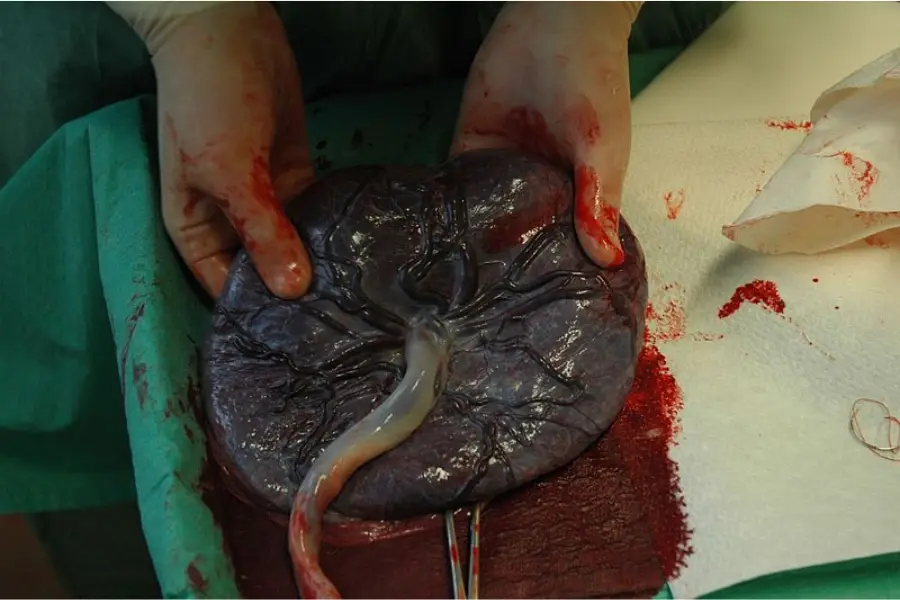
The third stage is converse than the first stage. This stage is the shortest period and lasts no longer than 30 minutes. Afterbirth, the placenta will be out in 2 ways.
- active – mother has treatment to make this stage happen faster
- physiological – mother lets this stage happen naturally
Active management
Mother will be given oxytocin to the thigh while giving birth or soon after birth. This injection could contract the mother’s womb. When the placenta has separated the womb, your midwife pulls the cord through the vagina.
Active management accelerates the separation of the placenta and reduces the risk of heavy bleeding afterbirth (postpartum haemorrhage). However, it could make mothers feel and be sick and suffer worse afterpains (contraction-like pains after birth).
Physiological management
Physiological management does not use oxytocin injection and lets the placenta deliver naturally. Before the cord stops pulsing, blood is still delivering from the placenta to your baby. And this stage takes around 2 to 4 minutes.
The moment when the placenta is out from the mother’s womb, the mother could feel some pressure in the bottom and have to push the placenta out. The placenta stays away from the womb in an hour, but it is just pushed out in a few minutes.
However, if the placenta does not deliver naturally or the mother bleeds seriously, the doctor will transform to active management. Mothers could ask for active management at any time within the third stage.
Supporting You: The Birth Partner’s Role
Your birth partner plays a crucial role throughout labor, providing physical and emotional support during each stage. Their presence can significantly impact your birth experience and help you feel more comfortable and confident.
During early and active labour: Your partner can help time contractions, encourage you to eat and drink, and remind you to use the bathroom regularly. They can assist with position changes, provide massage, and help you practice breathing techniques. Most importantly, they serve as your advocate, communicating with healthcare providers and helping ensure your birth preferences are respected.
During pushing and delivery: Your birth partner can hold your hand, offer words of encouragement, and help you stay focused between contractions. They might support your leg, help you get into comfortable positions, or remind you of breathing patterns. Many partners choose to cut the umbilical cord or be the first to announce the baby’s gender.
Practical preparation for partners: Birth partners should attend prenatal appointments and childbirth classes when possible. They should know the signs of labor, understand your birth plan, and have the hospital route planned. Packing their own bag with snacks, comfortable clothes, and phone charger ensures they can provide continuous support without needing to leave.
FAQs
True labor contractions become progressively stronger, longer, and closer together over time. They don’t stop when you change positions or rest. False labor contractions are irregular, don’t increase in intensity, and often stop with movement or rest. If you’re unsure, contact your healthcare provider. It’s always better to be checked than to worry.
This varies by hospital policy and your specific situation. Many hospitals now allow light snacks and clear liquids during early labor, as staying hydrated and maintaining energy helps labor progress. However, if you’re planning an epidural or there’s a possibility of cesarean delivery, your healthcare team may restrict food intake. Discuss this with your provider beforehand.
Labor progresses differently for everyone, and many factors can slow things down. Your healthcare team monitors both you and your baby continuously. If labor stalls, they have several safe options to help things along, including changing positions, walking, breaking your water, or administering oxytocin. Sometimes a cesarean delivery becomes necessary, and that’s okay. The goal is always a safe delivery for both mother and baby.
A Word From Babies Parent
After spending 39-42 weeks of pregnancy, feeling the child in their womb grow, all mothers go through painful but sacred moments to bring a life into this world. Hopefully through the above article, mothers will know what they will have to go through to prepare mentally along with healthily.
Source
- March of Dimes. Stages of Labor (https://www.marchofdimes.org/pregnancy/stages-of-labor.aspx). ↩︎
- National Institutes of Health. Eunice Kennedy Shriver National Institute of Child Health and Human Development. What are the stages of labor? (https://www.nichd.nih.gov/health/topics/labor-delivery/topicinfo/stages) ↩︎
Last update: 05/20/2026



![[variety of unsafe pregnancy foods including raw sushi deli meat soft cheese and raw eggs on a kitchen counter]](https://babiesparent.com/wp-content/uploads/2026/03/1_Unsafe_pregnancy_foods_202603301142-768x429.webp)