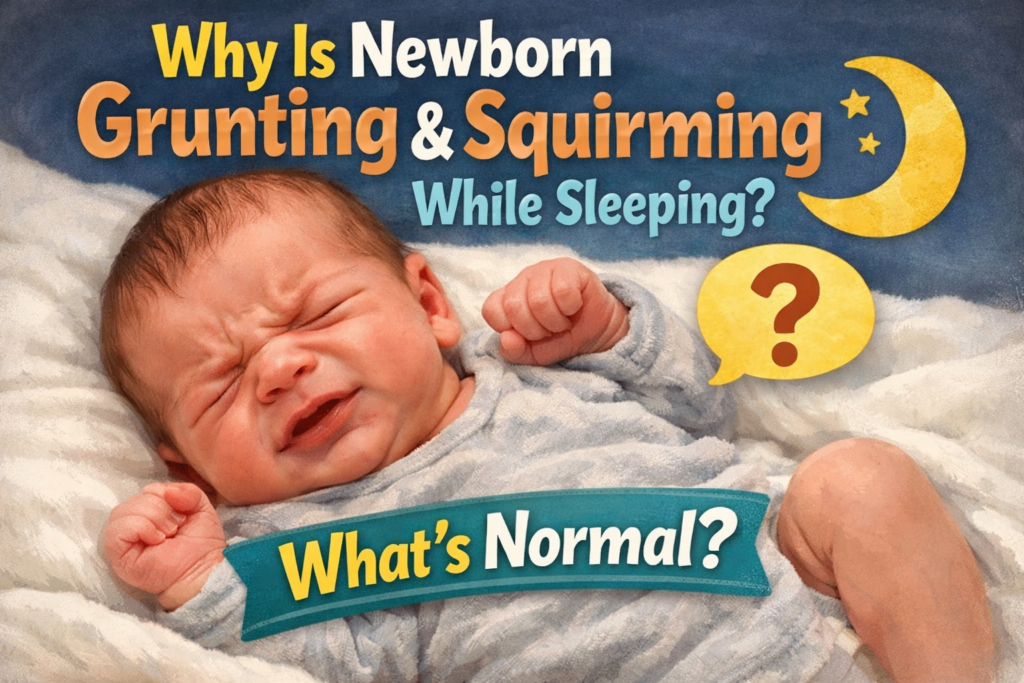
You’ve finally gotten your newborn to sleep, only to hear a symphony of grunts and groans while watching them squirm like they’re running a tiny marathon in their dreams. Before you panic and reach for your phone to call the pediatrician, take a deep breath – this behavior is completely normal and incredibly common among newborns.
Newborn grunting and squirming during sleep happens because your baby’s body is still developing and learning how to coordinate basic functions like breathing, digestion, and sleep cycles. Your little one spends about half their sleep time in active sleep (also called REM sleep), which naturally includes movement, irregular breathing, and yes, those adorable grunting sounds.
Understanding why your newborn makes these noises and moves so much during sleep will help you rest easier—literally. Let’s explore what’s really happening when your baby grunts and squirms at night, when it’s normal, and when you should reach out to your doctor.
What Is Newborn Grunting and Squirming?
Newborn grunting is a deep, guttural sound that babies make, often accompanied by visible squirming or wriggling movements. These sounds can occur during sleep, feeding, or even when your baby is awake and alert.
The grunting sound happens when your baby uses their diaphragm muscle, which puts pressure on the voice box. Combined with the squirming movements you see, it might look like your baby is uncomfortable or in distress—but most of the time, they’re simply adjusting to life outside the womb.
Many parents describe these sounds as similar to a small animal or even compare their newborn to a “disgruntled old man.” Sound familiar? You’re definitely not alone in this observation.
Why Do Newborns Grunt and Squirm While Sleeping?
Several completely normal developmental factors cause your baby to grunt and squirm during sleep:
Active Sleep (REM Sleep): Newborns spend approximately 50% of their sleep time in active sleep, compared to just 15% in adults. During this stage, your baby’s brain is incredibly active, processing new information and supporting crucial brain development. Active sleep includes rapid eye movements, irregular breathing, body movements, twitches, and vocal sounds like grunting. This is why you might notice your baby’s eyelids fluttering, their arms jerking, or hear those distinctive grunting noises—it’s all part of healthy sleep development.
Grunting Baby Syndrome (Infant Dyschezia): This is one of the most common reasons for newborn grunting and has an official medical name: infant dyschezia. Your baby is learning how to coordinate the muscles needed to pass stool. Adults naturally relax their pelvic floor muscles and use stomach muscles to push, but newborns haven’t developed this coordination yet. Instead, they use their diaphragm muscle, which creates pressure on the voice box and results in grunting sounds. Your baby might strain, grunt, turn red in the face, or even cry for 10 to 30 minutes before successfully passing a soft, normal bowel movement.
Developing Digestive System: Your newborn’s digestive system is brand new and still figuring out how to process milk efficiently. Gas, bloating, and the movement of food through the intestines can cause discomfort that leads to grunting and squirming. You might hear gurgling sounds along with the grunting as their digestive system works around the clock.
Nasal Congestion: Newborns are obligate nose breathers, meaning they breathe exclusively through their noses until about 3-4 months old. Their nasal passages are incredibly tiny—so small that even a little bit of mucus, dried milk, or normal secretions can cause congestion. This stuffiness can make breathing sound like snorting, grunting, or wheezing, especially during sleep when they’re lying flat.
Sleep Cycle Transitions: Newborns cycle through sleep stages every 45-50 minutes, much faster than adults’ 90-minute cycles. During these transitions between deep sleep and light sleep, your baby may grunt, cry out briefly, or squirm before settling back into the next sleep stage.
Gastroesophageal Reflux: Some babies experience reflux, where stomach contents flow back into the esophagus. This can cause discomfort that leads to grunting, especially after feedings. If you notice your baby arching their back, spitting up frequently, or seeming uncomfortable after eating, reflux might be the culprit.
Hunger or Discomfort: Sometimes grunting simply means your baby is hungry, has a wet diaper, feels too hot or cold, or needs a position change. Newborns communicate their needs through sounds and movements, and grunting is part of their vocabulary.
Is Newborn Grunting and Squirming Normal?
Yes, in the vast majority of cases, newborn grunting and squirming during sleep is completely normal and expected. These behaviors are part of your baby’s natural development as their body systems mature.
Pediatricians see this so frequently that they’ve given it specific names like “grunting baby syndrome” and recognize it as a normal phase of infancy. Most babies outgrow excessive grunting by around 3 to 4 months of age as their digestive system matures, they develop better muscle coordination, and they spend more time in quiet deep sleep rather than active REM sleep.
However, it’s important to know the difference between normal developmental grunting and signs that something might need medical attention.
When Should You Worry About Newborn Grunting?
While most grunting is harmless, certain warning signs indicate you should contact your pediatrician or seek immediate medical attention:
Signs of Respiratory Distress:
- Persistent grunting with every breath
- Flaring nostrils
- Blue or purple tinge to lips, tongue, or skin
- Retractions (skin pulling in between ribs or below the neck when breathing)
- Breathing faster than 60 breaths per minute
- Pauses in breathing longer than 10 seconds
- Wheezing, whistling, or high-pitched sounds with breathing
Feeding and Growth Concerns:
- Not gaining weight appropriately
- Refusing feeds or feeding poorly
- Excessive spitting up or vomiting
- Signs of dehydration (fewer than 6 wet diapers per day, dry mouth, sunken fontanelle)
Signs of Illness:
- Fever (100.4°F or higher in babies under 3 months requires immediate medical attention)
- Extreme lethargy or difficulty waking
- Persistent crying that won’t be consoled
- Stiff neck or body
- Rash along with grunting
Concerning Bowel Movements:
- Hard, pebble-like stools (different from the normal soft stool in grunting baby syndrome)
- Blood in stool
- Severe constipation with bloated, hard belly
- No bowel movement for several days with signs of discomfort
If your baby seems to be in significant pain, constantly grunts without relief, or you notice any of the warning signs above, trust your parental instincts and call your healthcare provider. It’s always better to check and have peace of mind.
How to Help Your Grunting and Squirming Newborn Sleep Better
While you can’t completely eliminate normal developmental grunting, you can help your baby be more comfortable:
Burp thoroughly after feedings: Trapped gas is a common cause of discomfort. Burp your baby halfway through feeds and again at the end. Try different burping positions—over your shoulder, sitting upright on your lap, or lying across your lap.
Bicycle their legs: During awake time, gently move your baby’s legs in a bicycle motion and press their knees gently to their tummy. This helps move gas through their system and can reduce nighttime grunting from digestive discomfort.
Hold baby upright after feeding: Keep your baby in an upright position for 20-30 minutes after feeding, especially if reflux seems to be an issue. This allows gravity to help keep milk down and reduces the likelihood of uncomfortable reflux during sleep.
Use a humidifier: If nasal congestion is contributing to grunting sounds, a cool-mist humidifier in your baby’s room can help keep nasal passages clear and moist. You can also use saline drops before sleep to help clear any mucus.
Try tummy time during the day: When your baby is awake and supervised, tummy time helps strengthen core muscles and can aid with digestion and gas relief. Stronger muscles mean better coordination for passing gas and stool.
White noise machine: While it won’t stop your baby’s grunting, white noise can help you sleep through the lighter grunts and movements. You’ll still wake for genuine cries, but you might not startle awake at every little sound.
Wait before intervening: When you hear grunting or see squirming, wait 2-5 minutes before rushing in. Many times, babies grunt and squirm during sleep transitions but settle themselves back down. If you intervene too quickly, you might actually wake a baby who was just transitioning between sleep cycles.
Ensure proper sleep environment: Keep your baby’s room at a comfortable temperature (68-72°F), use appropriate sleepwear for the season, and follow safe sleep guidelines. A comfortable baby grunts less from environmental discomfort.
When Does Newborn Grunting Stop?
The good news is that excessive grunting and squirming typically decrease significantly by 3 to 4 months of age. This timeline makes sense because:
- Your baby’s digestive system matures and processes milk more efficiently
- Muscle coordination improves for passing gas and stool
- Nasal passages grow larger, reducing congestion-related sounds
- Sleep patterns mature, with more time spent in quiet deep sleep versus active REM sleep
- Overall body systems become more coordinated
Some babies stop grunting earlier, while others may continue occasional grunting beyond 4 months. Every baby develops at their own pace. If grunting continues beyond 4 months and seems excessive or is accompanied by other symptoms, mention it to your pediatrician during your well-baby visit.
Understanding Your Baby’s Sleep Sounds
Beyond grunting, newborns make a whole orchestra of sleep sounds that can alarm new parents:
Whimpering and crying: Brief cry-outs during sleep usually mean your baby is transitioning between sleep cycles, not that they need you to intervene immediately.
Gurgling and bubbling: These sounds come from your baby’s developing digestive system working hard to process milk.
Sighing and cooing: These softer sounds typically occur during lighter sleep stages and are completely normal.
Hiccups: Very common in newborns, hiccups during sleep are usually harmless and often result from gulping air during feeding.
Whistling or squeaking: These high-pitched sounds are usually from air passing through tiny nasal passages and typically resolve as your baby grows.
Learning to distinguish between sounds that need your attention and normal sleep noises takes time. Most parents develop this skill within the first few weeks and learn their baby’s unique sleep sound patterns.
Room Sharing and Newborn Sleep Sounds
The American Academy of Pediatrics recommends room-sharing (but not bed-sharing) for at least the first 6 months of your baby’s life to reduce SIDS risk. However, having a noisy newborn sleeping right next to you can be challenging for parental sleep.
Strategies to make room-sharing work with a grunting baby:
- Position the bassinet or crib a few feet away from your bed rather than right beside it
- Use a white noise machine to mask lighter sounds
- Consider earplugs that filter out lower-level sounds but still allow you to hear cries
- Trade off “baby duty” with your partner so one person can sleep in another room occasionally
- Remember that this phase is temporary—your baby will become a quieter sleeper soon
Room-sharing allows you to monitor your baby’s breathing and quickly respond if genuine problems arise, even while the normal grunting becomes background noise.
Frequently Asked Questions
Is it normal for my newborn to grunt all night long?
Yes, many newborns grunt throughout the night, especially during the first few months. This is typically related to active sleep, digestive processes, or learning to pass stool. As long as your baby isn’t showing signs of respiratory distress or other concerning symptoms, periodic grunting all night is normal. It usually decreases significantly by 3-4 months.
Should I pick up my baby every time they grunt?
Not necessarily. Give your baby 2-5 minutes to see if they settle themselves. Many babies grunt and squirm during sleep transitions but don’t actually need intervention. However, if the grunting escalates to crying, your baby may genuinely need feeding, a diaper change, or comfort.
Can grunting mean my baby is constipated?
Grunting alone doesn’t mean constipation. In grunting baby syndrome, babies pass soft, normal stools after grunting and straining. True constipation involves hard, pebble-like stools that are difficult to pass. If your baby’s stools are hard or they haven’t had a bowel movement in several days with signs of discomfort, contact your pediatrician.
My baby turns red and looks like they’re in pain when grunting. Is this normal?
Yes, this is characteristic of grunting baby syndrome. Your baby is learning to coordinate their muscles for bowel movements and may strain, turn red or even purple, grunt loudly, and appear uncomfortable—but when they finally pass stool, it’s soft and normal. This doesn’t mean they’re in pain; they’re just working hard to figure out a new skill.
Will swaddling help reduce grunting and squirming?
Swaddling can help reduce startle reflexes and some squirming movements, which may help your baby sleep more soundly. However, it won’t eliminate grunting related to digestion or breathing, as these are internal processes. Always follow safe swaddling practices and stop swaddling once your baby shows signs of rolling over.
How can I tell if grunting is from normal causes or a serious breathing problem?
Normal grunting happens periodically, doesn’t occur with every single breath, and your baby’s color remains pink/normal. Concerning grunting happens with every breath, is accompanied by other signs like nostril flaring, blue color, retractions, or rapid breathing above 60 breaths per minute. When in doubt, contact your pediatrician or seek immediate medical attention.
Conclusion
Hearing your newborn grunt and squirm during sleep can be unsettling, especially when you’re already sleep-deprived and worried about doing everything right. Rest assured that in the vast majority of cases, these sounds and movements are completely normal signs of your baby’s developing body.
Your baby’s grunting typically comes from spending lots of time in active REM sleep, learning to coordinate digestive muscles, processing milk through their brand-new digestive system, or managing minor congestion in tiny nasal passages. These are all normal parts of early infant development that will improve as your baby grows.
Most babies significantly reduce their grunting and squirming by 3 to 4 months as their body systems mature. In the meantime, focus on making your baby comfortable with proper burping, tummy time, and creating a good sleep environment. Give your baby a moment to settle before intervening, as many grunts happen during normal sleep transitions.
However, always trust your parental instincts. If something feels wrong, if grunting is accompanied by signs of respiratory distress, fever, poor feeding, or other concerning symptoms, don’t hesitate to contact your pediatrician. That’s what they’re there for, and it’s always better to check and have peace of mind.
Remember, this noisy, squirmy phase is temporary. Before you know it, you’ll have a quieter sleeper—and you might even miss those adorable little grunts just a bit.