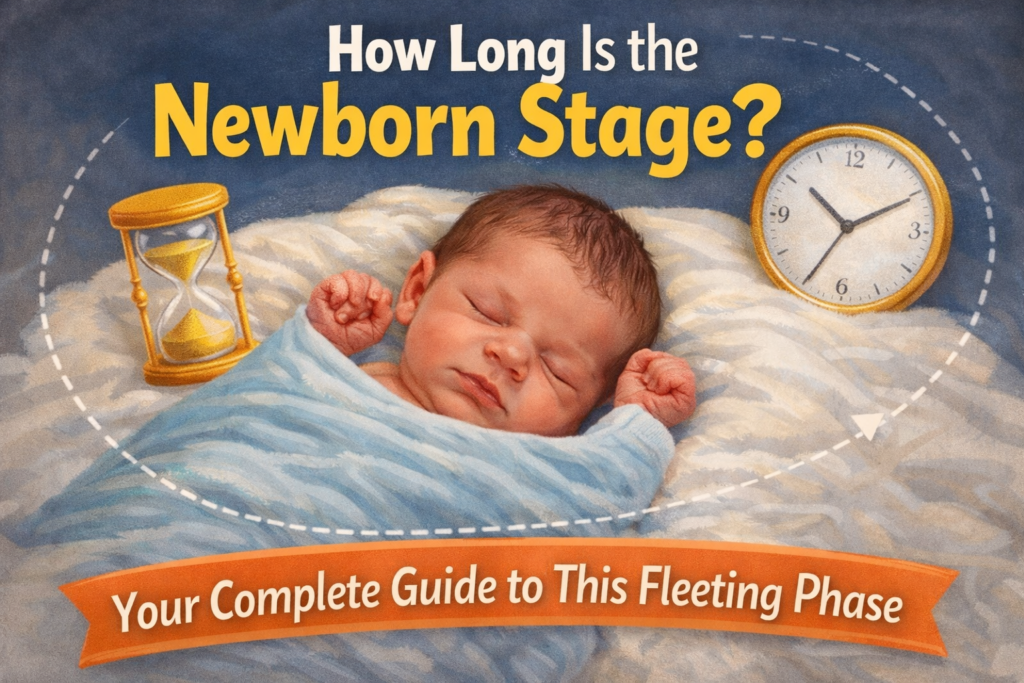
You’re holding your tiny bundle, marveling at those miniature fingers and toes, when the thought hits you: How long will my baby stay this small? If you’re wondering when the newborn stage ends, you’re asking a question every parent ponders—usually at 3 AM during yet another diaper change.
The newborn stage is both incredibly brief and feels like it stretches on forever, depending on whether you’re savoring sweet snuggles or navigating your fifth sleepless night in a row. Understanding this timeline can help you set realistic expectations and prepare for the exciting changes ahead. Most importantly, knowing how fleeting this phase truly is might help you soak in those precious moments a little more.
What Defines the Newborn Stage?
The newborn stage, also called the neonatal period, marks your baby’s initial adjustment to life outside the womb. During this time, your little one is making monumental changes—breathing air independently, regulating body temperature, and learning to eat for the first time.
This phase is characterized by specific behaviors and needs. Your baby will sleep 14-17 hours daily (though rarely in convenient stretches), feed every 2-3 hours around the clock, and rely completely on you for comfort and care. Those distinctive newborn reflexes like rooting, grasping, and the startle reflex are all hallmarks of this early period.
It’s also a critical bonding phase for you and your baby. Skin-to-skin contact, responding to cries, and learning your baby’s unique personality all happen during these formative weeks.
How Long Does the Newborn Stage Last?
Here’s where it gets interesting—the answer depends on who you ask.
The Medical Definition: 28 Days
According to the World Health Organization (WHO), the official newborn or neonatal period lasts exactly 28 days from birth. This is the definition used by pediatricians and healthcare professionals when discussing medical care and tracking early development.
The Extended Reality: 2-3 Months
However, most parenting experts and resources extend the newborn stage to 2-3 months based on developmental milestones rather than a strict calendar. This makes practical sense for parents because your baby’s behavior, sleep patterns, and needs don’t magically transform on day 29.
Why the Difference?
The medical definition focuses on the most critical period when newborns are at highest risk for health complications and require close monitoring. But from a developmental and parenting perspective, babies typically maintain “newborn-like” characteristics until around 8-12 weeks when significant changes begin to emerge.
Rest assured, both definitions are correct—they just serve different purposes. For day-to-day parenting, thinking of the newborn stage as lasting about 2-3 months will probably feel more accurate.
Signs Your Baby Is Transitioning Out of the Newborn Phase
Around 2-3 months, you’ll start noticing distinct changes that signal your baby is becoming an infant rather than a newborn:
More Predictable Sleep Patterns
Your baby begins sleeping for longer stretches at night, with some babies managing 4-6 hour blocks by 8-12 weeks. While they’re not “sleeping through the night” yet, the feeding every 2 hours around the clock starts to ease.
Social Smiling
One of the most heart-melting milestones appears around 6-8 weeks: your baby’s first real social smile. These aren’t the reflexive newborn smiles during sleep, but genuine responses to your face and voice.
Improved Head Control
By 2-3 months, babies can lift and hold their heads up briefly during tummy time, showing developing neck and shoulder strength. This is a significant shift from the wobbly head support newborns require.
Increased Alertness and Interaction
Your baby spends more time awake and alert, taking in their surroundings with curiosity. They track moving objects with their eyes, turn toward sounds, and show clear recognition of familiar faces.
Cooing and Vocalization
Around 6-8 weeks, babies begin experimenting with sounds beyond crying—soft coos, gurgles, and vowel-like noises that mark early language development.
More Defined Crying Patterns
You’ll begin distinguishing between different cries (hunger, tiredness, discomfort) more easily as your baby develops more specific communication patterns.
Newborn Developmental Milestones to Watch For
Even though the newborn stage feels dominated by sleep and feeding, your baby is hitting important milestones:
First 28 Days:
- Reflexes: Rooting (turning toward touch on cheek), sucking, grasping, and Moro (startle) reflex
- Vision: Can see 8-12 inches away (perfect for gazing at your face during feeding)
- Hearing: Recognizes your voice and startles at loud noises
- Movement: Jerky, uncoordinated movements gradually becoming smoother
Weeks 4-8:
- Social: First social smiles around 6-8 weeks
- Motor: Brief head lifts during tummy time
- Sensory: Following objects with eyes, tracking movement
- Communication: Beginning to coo and make vowel sounds
Weeks 8-12:
- Physical: Better head control, stronger neck muscles
- Cognitive: More alert periods, showing curiosity
- Social: Smiling consistently, may even laugh
- Motor: Bringing hands together, batting at objects
Remember, every baby develops at their own pace. These are general guidelines, not strict deadlines. If you have concerns about your baby’s development, your pediatrician is always your best resource.
What Makes the Newborn Stage So Unique?
The newborn phase has characteristics you won’t see at any other stage:
Total Dependence
Newborns cannot do anything for themselves. They can’t lift their heads, self-soothe, or even burp without help. This complete reliance creates an intense bonding experience but can also feel overwhelming.
Constant Feeding
With tiny stomachs holding only 1-2 ounces initially, newborns need to eat every 2-3 hours around the clock. Whether breastfeeding or formula feeding, expect 8-12 feeding sessions daily in the early weeks.
Irregular Sleep
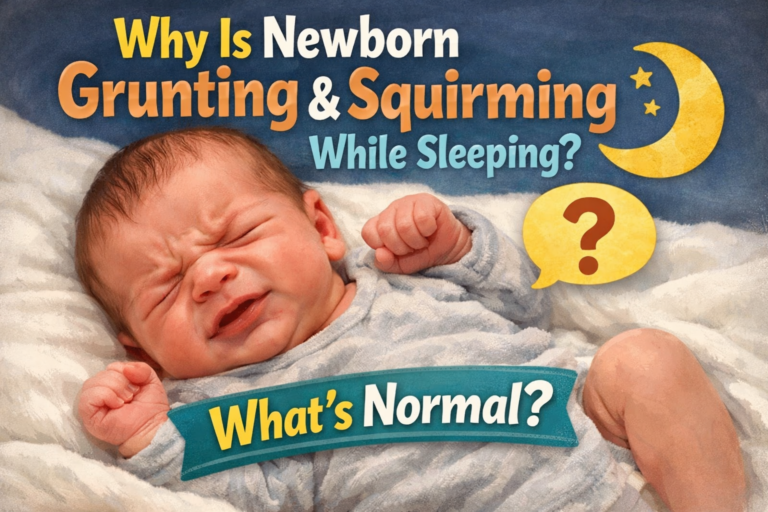
Newborns don’t distinguish day from night. They sleep in short 2-4 hour stretches throughout the 24-hour day, waking primarily to eat. This unpredictable schedule is one of the biggest challenges new parents face.You might also notice your newborn grunting and squirming while sleeping—those sounds and movements are completely normal as your baby’s digestive system develops and they spend significant time in active sleep.
Primitive Reflexes
Those automatic responses—the way your baby’s hand grasps your finger, how they turn toward anything touching their cheek—are unique to the newborn period and gradually fade as voluntary control develops.
Rapid Changes
No other stage brings such dramatic daily changes. Your baby might double their birth weight by 6 months, but much of that growth happens in these early weeks.
Tips for Surviving (and Savoring) the Newborn Days
This phase is intense. Here’s how to navigate it with a bit more ease:
Accept Help
This isn’t the time to prove you can do it all. When someone offers to hold the baby while you shower or bring you a meal, say yes. Friends and family want to help—let them.
Sleep When the Baby Sleeps
You’ve heard this advice a million times, and here’s why: it works. Those dishes can wait. Your body needs rest to recover and handle the demanding schedule.
Keep Supplies Handy
Stock diaper-changing essentials in multiple rooms. Keep burp cloths, extra outfits, and feeding supplies within easy reach wherever you spend time. Future exhausted you will be grateful.
Lower Your Expectations
Your house won’t be perfect. You might wear the same sweatpants three days running. That’s completely normal and okay. Focus on the essentials: feeding baby, keeping baby safe, and taking care of your basic needs.
Document the Moments
Take photos and videos. Write down funny observations or special moments. The newborn stage passes so quickly that the details blur together—you’ll treasure these memories later.
Trust Your Instincts
You’re learning your baby’s unique cues and needs. While advice is helpful, you’re becoming the expert on your own child. If something feels wrong, trust that feeling and reach out to your pediatrician.
Remember It’s Temporary
On the hardest nights, remind yourself: this phase is brief. Your baby will soon sleep longer, eat on a schedule, and those round-the-clock needs will ease. You’re not alone in finding this challenging.
When Does the Infant Stage Begin?
The infant stage follows the newborn phase and extends until your baby’s first birthday. This broader category encompasses tremendous growth and development:
3-6 Months:
- Rolling over
- Improved hand-eye coordination
- Laughing and babbling
- Sitting with support
6-9 Months:
- Sitting independently
- Starting solid foods
- Stranger awareness
- Increased mobility (scooting, crawling preparation)
9-12 Months:
- Crawling or other mobility methods
- Pulling to stand
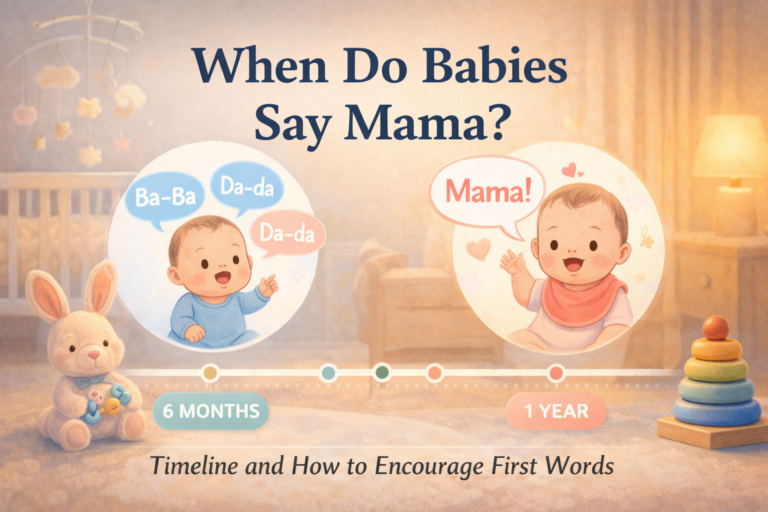
- First words might emerge
- Showing preferences and personality
The transition from newborn to infant isn’t a single dramatic moment but a gradual shift as your baby becomes more interactive, mobile, and communicative.
Special Considerations for Premature Babies
If your baby was born prematurely (before 37 weeks), the newborn stage might look different. Premature babies are typically assessed using their “corrected age”—calculated by subtracting the weeks they were born early from their current age.
For example, if your baby was born 8 weeks early and is now 4 months old, their corrected age is 2 months. This adjusted age is used to evaluate developmental milestones more accurately.
What This Means:
- Your premature baby might reach milestones like social smiling or head control later than full-term babies
- The “newborn stage” might feel extended as your baby catches up developmentally
- Extra NICU time or medical needs might lengthen the adjustment period
- Your pediatrician will guide you on what to expect based on your baby’s specific situation
Remember, premature babies often catch up to their full-term peers by age 2-3, though every child is unique.
Frequently Asked Questions
When should I start worrying if my newborn isn’t meeting milestones?
Every baby develops at their own pace, and there’s a wide range of “normal.” However, you should contact your pediatrician if by 2 months your baby doesn’t respond to loud sounds, doesn’t follow objects with their eyes, doesn’t smile at people, or seems very stiff or very floppy. Trust your instincts—if something feels off, it’s always okay to ask your doctor for reassurance.
Can the newborn stage last longer than 3 months?
While most babies show clear infant characteristics by 3 months, some—particularly premature babies or those with developmental delays—might maintain newborn-like behaviors longer. Additionally, some parents simply perceive their baby as a “newborn” for a longer period, which is perfectly fine. There’s no strict cutoff where your baby stops being a newborn overnight.
How do I know if my baby is sleeping too much or too little?
Newborns typically sleep 14-17 hours in a 24-hour period, though some sleep as little as 11 hours or as much as 19 hours. The key is whether your baby is feeding well (at least 8-12 times daily), having adequate wet and dirty diapers (6+ wet diapers daily after the first week), and gaining weight appropriately. If your baby is extremely difficult to wake for feedings or seems excessively sleepy, contact your pediatrician.
When do babies start sleeping through the night?
Most babies don’t sleep through the night during the newborn stage. Some begin sleeping 5-6 hour stretches by 3-4 months, but many don’t consistently sleep through the night until 6-9 months or even later. This variation is completely normal and doesn’t reflect on your parenting. Establishing bedtime routines and healthy sleep habits during the newborn stage can help, but there’s no magic trick to make it happen faster.
Is it normal to not feel bonded with my newborn right away?
Absolutely. While some parents feel instant overwhelming love, others need time to develop that bond—and both experiences are completely normal. The newborn stage is exhausting, and sleep deprivation, hormonal changes, and the stress of caring for a helpless infant can make bonding challenging initially. The bond typically strengthens as you get to know your baby and they become more interactive. If you’re experiencing persistent negative feelings, difficulty caring for your baby, or thoughts of harming yourself or your baby, please reach out to your healthcare provider immediately for support.
Should I wake my newborn to feed?
In the first few weeks, yes—most pediatricians recommend waking newborns to feed if they sleep longer than 3-4 hours during the day or 4-5 hours at night, especially if they’re working to regain their birth weight. Once your baby has regained birth weight and is growing well (usually by 2 weeks), many doctors give the green light to let them sleep longer stretches at night. Always follow your pediatrician’s specific guidance for your baby.
Conclusion
The newborn stage, whether you define it as 28 days or 2-3 months, is undeniably brief. These early weeks bring challenges that test every new parent—sleepless nights, constant feeding, and the weight of keeping another human alive can feel overwhelming.
But this phase also brings unparalleled sweetness: those tiny yawns, the way your newborn curls into your chest, their miniature fingers wrapped around yours. Before you know it, your baby will be sitting up, crawling, and eventually running away from you at the park.
Sound familiar? You’re doing an amazing job, even on the days when it doesn’t feel that way. The newborn stage is temporary—both the hard parts and the precious moments. Try to be present for both, ask for help when you need it, and remember that each day brings you closer to easier routines and more sleep.
Your baby won’t be a newborn for long. Embrace this fleeting stage as much as you can, knowing that while it’s intense, it’s also setting the foundation for all the incredible milestones to come.