Just when you thought those sleepless newborn nights were behind you, your once-great sleeper is suddenly waking up multiple times at night, fighting bedtime, or refusing naps altogether. Sound familiar? If your 16-month-old is experiencing these sleep disruptions, you’re not alone.
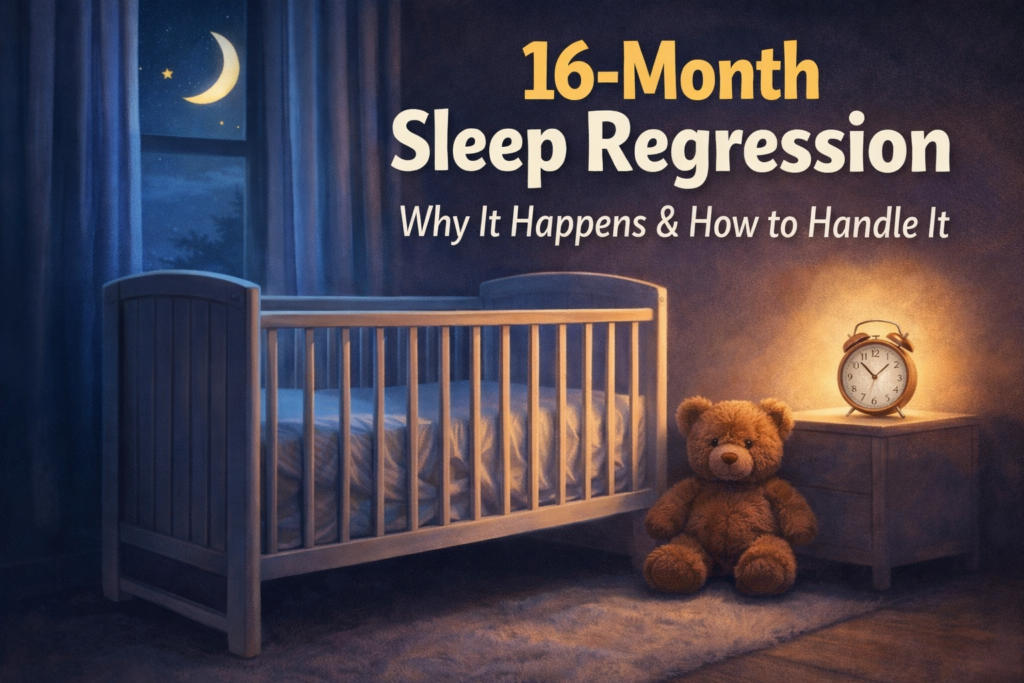
The 16-month sleep regression is a temporary phase that affects many toddlers, typically occurring anywhere between 14 to 18 months. While it can feel overwhelming, understanding why this happens and how to respond can help your whole family get back to better sleep. Rest assured, this too shall pass.
What Is the 16-Month Sleep Regression?
The 16-month sleep regression refers to a sudden disruption in your toddler’s previously established sleep patterns. Your little one who was sleeping soundly might now be waking frequently at night, resisting naps, taking shorter naps, or having difficulty falling asleep at bedtime.
While there isn’t a predetermined “16-month sleep regression” that affects all children on the same schedule, many parents report sleep challenges during this developmental window. Sleep patterns naturally ebb and flow as toddlers grow, and this age is particularly prone to sleep disruptions.
What makes this regression different: Unlike the 4-month sleep regression, which involves a permanent neurological change in sleep architecture, the 16-month regression is driven by developmental, emotional, and physical changes that are temporary in nature. If you remember those early days when your newborn was grunting and squirming while sleeping, that was due to developing digestive and respiratory systems. Now at 16 months, sleep disruptions stem from cognitive and emotional development rather than physical immaturity.
Why Does Sleep Regression Happen at 16 Months?
Several factors contribute to sleep disruptions around this age. Understanding these causes can help you respond appropriately:
Developmental Milestones: Around 16 months, toddlers experience a surge in physical and cognitive abilities. They may be walking more confidently, climbing furniture, or rapidly acquiring new words. These exciting developments can make their brains too busy to wind down easily at sleep time.
Separation Anxiety Peak: Research shows that separation anxiety often peaks around 15-16 months. Your toddler is now more aware of their surroundings and understands that you continue to exist even when you’re not in the room. This newfound awareness can make bedtime particularly challenging as they resist being alone.
Nap Transition: Many toddlers transition from two naps to one nap between 12 to 18 months. If your 16-month-old is still on a two-nap schedule, they may be showing signs of being ready to drop to one nap. This transition period can temporarily disrupt both daytime and nighttime sleep.
Teething Pain: First-year molars typically emerge between 13 to 19 months, and these larger teeth can cause significant discomfort. The pain from teething can wake your toddler at night or make it harder for them to fall asleep initially.
Circadian Rhythm Shift: Recent research has shown that the biological bedtime shifts by as much as an hour later during toddlerhood. This means the bedtime that worked perfectly for months may suddenly stop working, leaving you with a tired but unable-to-sleep toddler.
Testing Boundaries: This age marks the beginning of your toddler understanding cause and effect. They’re learning what happens when they call out, climb out of the crib, or ask for “one more” book. While it may feel like manipulation, it’s actually normal cognitive development.
Signs Your Toddler Is Experiencing Sleep Regression
How do you know if your 16-month-old is going through a sleep regression? Watch for these common signs:
- Frequent night wakings when your toddler previously slept through the night
- Bedtime resistance or taking longer than 20 minutes to fall asleep
- Shortened or refused naps during the day
- Early morning waking (before 6:00 AM) when this wasn’t previously an issue
- Increased clinginess at bedtime or during the day
- More emotional outbursts due to overtiredness
Remember, every toddler is different. Your child may experience all of these signs or just a few.
How Long Does the 16-Month Sleep Regression Last?
The good news is that sleep regressions are temporary. Most 16-month sleep regressions last anywhere from a few days to a few weeks, with the typical duration being 1-2 weeks.
However, the duration can vary depending on several factors:
- The underlying cause (teething may resolve faster than separation anxiety)
- Whether your toddler needs a nap transition
- How consistently you respond to the regression
- Your child’s individual temperament
Important note: If sleep disruptions persist beyond 4-6 weeks, it may indicate that your toddler has developed new sleep associations or habits that need to be gently modified, or there may be an underlying issue worth discussing with your pediatrician.
16-Month-Old Sleep Schedule: What’s Normal?
Understanding appropriate sleep needs can help you determine if schedule adjustments are needed:
Total daily sleep needs: 11-14 hours per day
Nighttime sleep: 10-12 hours
Daytime sleep: 1-3 hours (depending on whether they’re taking one or two naps)
For toddlers still on two naps:
- Wake windows: 3.25-4 hours between naps
- First nap: 1-1.5 hours
- Second nap: 30 minutes to 1.5 hours
- Bedtime: 7:00-8:00 PM
For toddlers on one nap:
- Wake windows: Approximately 5 hours before and after the nap
- Single nap: 2-3 hours (capped at 3 hours)
- Nap timing: 12:00-2:30 PM (ideal window)
- Bedtime: 7:00-8:00 PM
How to Survive the 16-Month Sleep Regression
While you can’t prevent a sleep regression, you can help your family navigate it more smoothly:
Maintain Consistent Routines
Consistency is your best friend during sleep regressions. Establish a predictable bedtime routine that signals to your toddler that sleep is approaching:
- Start winding down 30-45 minutes before bedtime
- Follow the same sequence every night (bath, pajamas, books, song, bed)
- Keep the routine calming and avoid stimulating activities
- End the routine definitively so your toddler knows when it’s time to sleep
Evaluate Nap Needs
If your toddler is showing signs of needing to drop to one nap, it may be time to make that transition. Signs include:
- Refusing one of the two naps consistently
- Taking a long time to fall asleep at naps or bedtime
- Waking up at night when nights were previously solid
- Can handle longer wake windows without becoming overtired
Transitioning tip: Move gradually by slowly pushing the morning nap later by 15-30 minutes every few days until you reach the ideal midday nap time around 12:00 PM.
Address Separation Anxiety
Help your toddler feel secure without creating dependencies:
- Practice short separations during the day
- Use a consistent, brief goodbye at bedtime
- Provide a comfort object (small blanket or stuffed animal)
- Reassure your toddler verbally, but avoid extended interactions during night wakings
- Consider a night light if darkness seems frightening
Adjust Wake Windows
If your toddler seems not tired enough at bedtime or nap time, they may need longer wake windows. Gradually extend wake windows by 10-15 minutes every few days until you find the sweet spot where your toddler is tired but not overtired.
Manage Teething Discomfort
For teething-related sleep issues:
- Offer a cold teething toy before bedtime
- Consult your pediatrician about appropriate pain relief options
- Keep nighttime interactions brief and boring even when comforting
Create an Optimal Sleep Environment
Ensure your toddler’s room supports good sleep:
- Keep it dark with blackout curtains
- Use white noise to block out household sounds
- Maintain a comfortable temperature (68-72°F)
- Minimize distractions and stimulating toys
Stay Consistent With Your Approach
Perhaps the most important strategy is consistency. Avoid introducing new sleep associations (like rocking to sleep or bringing your toddler into your bed) that you don’t want to continue long-term. These temporary solutions can become permanent habits that are harder to break later.
When to See a Pediatrician
While most sleep regressions resolve on their own, contact your child’s doctor if:
- Sleep disruptions last longer than 4-6 weeks
- Your toddler shows signs of illness (fever, persistent cough, difficulty breathing)
- You notice unusual behavioral changes during the day
- Your toddler is in obvious pain or discomfort
- Sleep issues are significantly impacting your family’s functioning
- You’re concerned about your toddler’s overall development or well-being
Trust your parental instincts. If something feels wrong, it’s always better to seek professional guidance.
Frequently Asked Questions
Is there really a 16-month sleep regression?
While not every toddler experiences sleep disruptions at exactly 16 months, this age falls within a common regression window (14-18 months) when many toddlers face sleep challenges. Sleep patterns naturally fluctuate during toddlerhood as developmental changes occur.
Can I sleep train during a regression?
Yes, you can establish healthy sleep habits during a regression. In fact, maintaining consistency with your sleep approach can help the regression pass more quickly. Choose a method that aligns with your parenting style and your toddler’s temperament, whether that’s gradual fading or check-and-console methods.
Should I drop to one nap at 16 months?
It depends on your individual toddler. While some 16-month-olds are ready for one nap, others still need two naps per day. Watch for signs of readiness like consistently refusing one nap, difficulty falling asleep at naps or bedtime, or being able to handle wake windows of 5+ hours without becoming overtired.
Why is my 16-month-old suddenly waking at night?
Nighttime wakings at this age can be caused by developmental milestones, separation anxiety, teething, needing longer wake windows, or being in the process of transitioning to one nap. Evaluate which factors might be affecting your toddler and adjust accordingly.
How do I know if it’s a regression or something else?
A sleep regression typically involves a sudden change in previously good sleep patterns and usually coincides with developmental changes. If your toddler has never been a good sleeper, you may be dealing with underlying sleep habits rather than a regression. If sleep issues persist beyond 4-6 weeks or you’re concerned, consult your pediatrician.
Conclusion
The 16-month sleep regression can feel exhausting and frustrating, especially when you thought the hard sleep battles were over. Remember that this phase is temporary and is actually a sign of your toddler’s healthy development. They’re growing, learning, and changing rapidly—and sometimes that growth temporarily disrupts sleep.
By understanding the causes, maintaining consistent routines, and responding calmly to your toddler’s needs, you can help your family navigate this regression successfully. Be patient with yourself and your little one. Before you know it, you’ll all be sleeping soundly again.
If you’re struggling and feeling overwhelmed, don’t hesitate to reach out to your pediatrician or a pediatric sleep consultant for personalized support. You’re doing a great job, and this challenging phase will pass.
Sources
- Huckleberry. (2025). “16 month sleep regression: Myth or real?”. https://huckleberrycare.com/blog/16-month-sleep-regression-myth-or-real ↩︎
- Sleep Foundation. (2025). “18-Month Infant Sleep Regression”. https://www.sleepfoundation.org/baby-sleep/18-month-sleep-regression ↩︎
- Little Ones. (2025). “The 12-15 Month Sleep Regression”. https://www.littleones.co/blogs/our-blog/the-12-15-month-sleep-regression-1 ↩︎
- Tiny Transitions. (2025). “Is there a 16-month sleep regression?”. https://tinytransitions.com/is-there-a-16-month-sleep-regression/ ↩︎
- Baby Sleep Science. (2025). “The Toddler (16-18-ish) Month Regression: What is it and What can be Done”. https://www.babysleepscience.com/single-post/2014/09/14/the-toddler-18-ish-month-regression-what-is-it-and-what-can-be-done-about-it ↩︎
- First Cry Parenting. (2025). “16 Month Sleep Regression – Causes, Signs and Tips To Manage”. https://parenting.firstcry.com/articles/gen-16-month-sleep-regression-causes-signs-and-tips-to-manage/ ↩︎