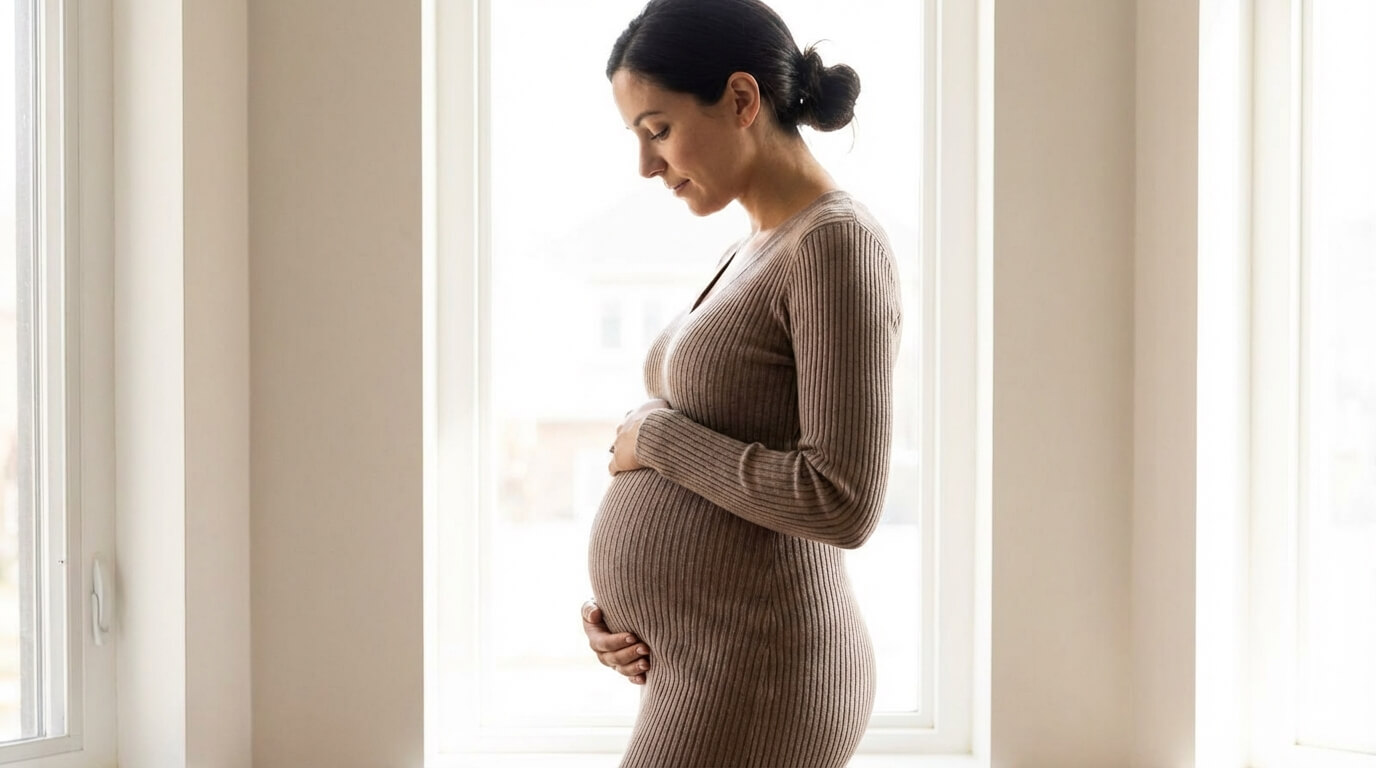
The second trimester of pregnancy spans weeks 13 through 27 and produces the most visible physical transformation of all three trimesters. Your uterus expands from behind the pelvic bone into the abdominal cavity, your blood volume increases by nearly 50%, and your baby grows from the size of a lemon to over 14 inches long. Most women gain between 12 and 14 pounds during these 15 weeks alone.
This guide covers the exact symptoms, body changes, and developmental milestones that define the second trimester, organized by the stage when each one typically appears.
Why the Second Trimester Feels Different
The shift from the first to the second trimester is dramatic. During the first 12 weeks, hCG levels surge to build the placenta, causing extreme nausea and fatigue. By week 13, the placenta takes over hormone production from the ovaries, and hCG levels begin to decline.
This hormonal transition is the reason most women experience a sudden wave of energy and appetite between weeks 13 and 15. Obstetricians often call this period the “honeymoon trimester” because the worst first-trimester symptoms fade before the physical discomforts of the third trimester begin.
The relief is real, but it is temporary. New symptoms replace the old ones as your body adapts to an increasingly large and active baby.
Weeks 13 to 16: The Energy Returns
What Your Body Does
Your uterus rises above the pubic bone and begins pressing outward against the abdominal wall. First-time mothers typically notice when the bump becomes visible between weeks 12 and 16. Women who have given birth before often show earlier because the abdominal muscles are already stretched.
Blood volume increases rapidly during this phase. Your heart pumps approximately 1.5 liters of additional blood per minute to supply the placenta, which now handles all nutrient and oxygen delivery to the fetus. This circulatory expansion causes:
- Nasal congestion from swollen blood vessels in the nasal passages
- Bleeding gums during brushing (pregnancy gingivitis)
- Visible veins across the chest and abdomen
- Lower blood pressure that can cause dizziness when standing up quickly
What Your Baby Does
By week 16, the fetus measures about 11.5 centimeters and weighs roughly 100 grams. The skeleton transitions from soft cartilage to hardened bone. Facial muscles develop enough for the fetus to squint, frown, and grimace. The kidneys begin producing urine, which the fetus excretes directly into the amniotic fluid.
Weeks 17 to 20: Quickening and Skin Changes
Feeling the First Movements
Quickening, the medical term for the first detectable fetal movement, typically occurs between weeks 16 and 24. First-time mothers usually notice it around week 20. Women in their second or third pregnancy often feel it as early as week 16 because they recognize the subtle sensation from experience.
Early quickening feels like gentle flutters, bubbles popping, or tiny pulses low in the abdomen. These sensations are easy to confuse with gas or digestion. An anterior placenta (attached to the front wall of the uterus) can cushion the movements, delaying detection by several weeks.
Tracking your experience of those first baby movements helps your doctor establish a baseline for fetal activity later in pregnancy.
Skin Pigmentation Changes
Rising estrogen and melanocyte-stimulating hormone (MSH) trigger noticeable skin changes during the second trimester:
| Skin Change | Description | Who It Affects |
|---|---|---|
| Linea nigra | A dark vertical line running from the navel to the pubic bone | Up to 75% of pregnant women |
| Melasma (chloasma) | Brown or grayish patches on the forehead, cheeks, and upper lip | 50% to 70% of pregnant women |
| Areola darkening | Nipples and surrounding skin become noticeably darker | Nearly all pregnant women |
| Spider veins | Tiny red or purple blood vessels visible on the face and legs | 60% to 70% of pregnant women |
These pigmentation changes result directly from the hormonal environment of pregnancy. Most fade within several months after delivery, though melasma can persist longer in women with darker skin tones.
Weeks 21 to 24: Stretch Marks and Weight Gain
Stretch Marks (Striae Gravidarum)
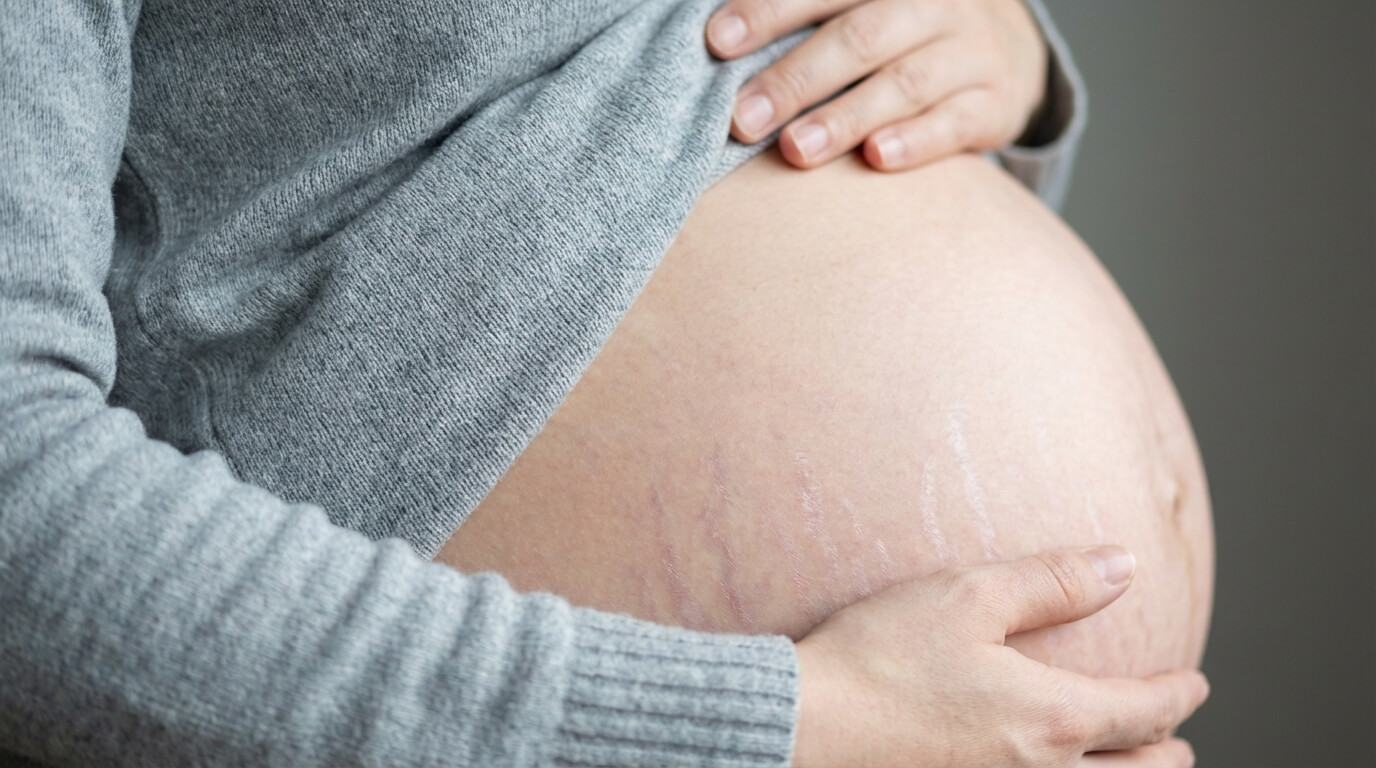
Stretch marks affect 50% to 90% of pregnant women. They typically appear between weeks 24 and 30, when the skin over the abdomen, breasts, and hips stretches rapidly. The marks start as red or purple streaks and gradually fade to white or silver after delivery.
Genetics determine susceptibility more than any external factor. If your mother developed pregnancy stretch marks, you are significantly more likely to develop them as well. No topical cream has strong clinical evidence for prevention, but keeping the skin hydrated with fragrance-free moisturizer can reduce itching and irritation.
Weight Gain Expectations
For women with a healthy pre-pregnancy BMI (18.5 to 24.9), the general recommendation is approximately 1 pound (0.45 kg) per week during the second and third trimesters. Your body requires an additional 340 calories per day during the second trimester to support fetal growth and increased blood volume.
That weight gain distributes across multiple biological demands:
- Baby: 1 to 2 pounds by week 24
- Placenta: approximately 1.5 pounds
- Amniotic fluid: approximately 2 pounds
- Uterine muscle growth: approximately 2 pounds
- Increased blood volume: 3 to 4 pounds
- Breast tissue growth: 1 to 2 pounds
Round Ligament Pain
The round ligaments are two rope-like bands that anchor the uterus to the groin. As the uterus expands upward and outward during the second trimester, these ligaments stretch and tighten. The result is a sudden, sharp, stabbing pain in the lower abdomen or groin area.
Round ligament pain affects 10% to 30% of pregnant women. It is most common between weeks 18 and 24 and triggers most frequently during sudden movements: rolling over in bed, standing up quickly, coughing, or laughing. The pain is brief, lasting seconds to minutes, and is not dangerous.
Moving slowly when changing positions and wearing a maternity support belt can reduce the frequency and intensity of these episodes.

Weeks 25 to 27: Late Second Trimester Adjustments
Back Pain Intensifies
Low back pain is one of the most common pregnancy complaints, affecting 45% to 75% of women overall. During the second trimester, the prevalence ranges from 35% to 60%.
Three biological factors drive pregnancy back pain:
- Shifting center of gravity. Your growing uterus pulls your center of mass forward, forcing the lumbar spine into an exaggerated curve (lordosis).
- Relaxin hormone. This hormone loosens the ligaments and joints in the pelvis to prepare for delivery. The loosening extends to the spinal joints, reducing stability.
- Muscle fatigue. The abdominal muscles stretch and lose some of their ability to support the spine, causing the back muscles to compensate.
Sleep Position Changes
By the late second trimester, sleeping on your back compresses the inferior vena cava, the major vein that returns blood from the lower body to the heart. This compression can reduce blood flow to the placenta and cause dizziness, nausea, and shortness of breath.
The left lateral position (sleeping on your left side) keeps the vena cava open and maximizes blood flow to the uterus and kidneys. Placing a pillow between the knees aligns the hips and reduces lower back strain. Learning which sleeping positions stay safe during pregnancy becomes increasingly important as the uterus grows heavier through the third trimester.

Body Temperature and Bathing
Your basal body temperature runs slightly higher during pregnancy due to increased metabolic rate and blood volume. Hot baths, saunas, and hot tubs can raise your core temperature above 101°F (38.3°C), which studies have linked to neural tube defects in the first trimester and potential complications later.
Warm baths (below 100°F / 37.8°C) are generally safe and can relieve muscle aches and back pain during the second trimester. Review the safety guidelines for bathing during pregnancy to determine the right water temperature and bath duration.
Hair and Nail Changes During the Second Trimester
Elevated estrogen levels extend the growth phase (anagen) of your hair cycle during pregnancy. The result is thicker, fuller hair because fewer strands enter the shedding phase. Many women notice this change most clearly during the second trimester.
This extra hair growth is temporary. After delivery, estrogen drops rapidly, and the accumulated hair enters the shedding phase simultaneously. This delayed shedding, called telogen effluvium, produces noticeable hair thinning in the postpartum months. The shedding typically peaks two to four months after birth and resolves within 6 to 12 months without treatment.
Fingernails also grow faster during pregnancy, though they may become more brittle or develop ridges. Toenails follow the same pattern but are harder to notice.

Second Trimester Symptoms at a Glance
| Symptom | When It Typically Starts | How Common |
|---|---|---|
| Visible baby bump | Weeks 12 to 16 | All women |
| Nasal congestion | Weeks 13 to 16 | 20% to 30% |
| Quickening (first movement) | Weeks 16 to 24 | All women |
| Linea nigra | Weeks 16 to 20 | Up to 75% |
| Round ligament pain | Weeks 18 to 24 | 10% to 30% |
| Stretch marks | Weeks 24 to 30 | 50% to 90% |
| Back pain | Weeks 20 to 27 | 35% to 60% |
| Sleep disruption | Weeks 24 to 27 | 60% to 80% |
When to Call Your Doctor During the Second Trimester
Contact your healthcare provider immediately if you experience:
- Vaginal bleeding or fluid leaking
- Contractions that occur at regular intervals before week 37
- Sudden, severe headache with vision changes (possible preeclampsia sign)
- Pain or burning during urination with fever
- Reduced fetal movement after week 24 (once you have established a pattern)
- Severe swelling in the face or hands that appears suddenly
These symptoms do not always indicate a complication, but they require prompt clinical evaluation.
Conclusion
The second trimester replaces early pregnancy nausea with a new set of physical changes driven by rapid fetal growth and hormonal shifts. Understanding exactly when each symptom appears and why your body produces it helps you prepare for the discomforts ahead and recognize the warning signs that need medical attention. Talk to your OB-GYN at your next prenatal visit about any symptoms that concern you.
References
[1] Cleveland Clinic. (2024). “Second Trimester of Pregnancy.” Retrieved from clevelandclinic.org
[2] Mayo Clinic. (2024). “Fetal development: The 2nd trimester.” Retrieved from mayoclinic.org
[3] American Pregnancy Association. (2024). “Second Trimester Symptoms and Body Changes.” Retrieved from americanpregnancy.org
[4] Johns Hopkins Medicine. (2024). “The Second Trimester.” Retrieved from hopkinsmedicine.org


![[variety of unsafe pregnancy foods including raw sushi deli meat soft cheese and raw eggs on a kitchen counter]](https://babiesparent.com/wp-content/uploads/2026/03/1_Unsafe_pregnancy_foods_202603301142-768x429.webp)