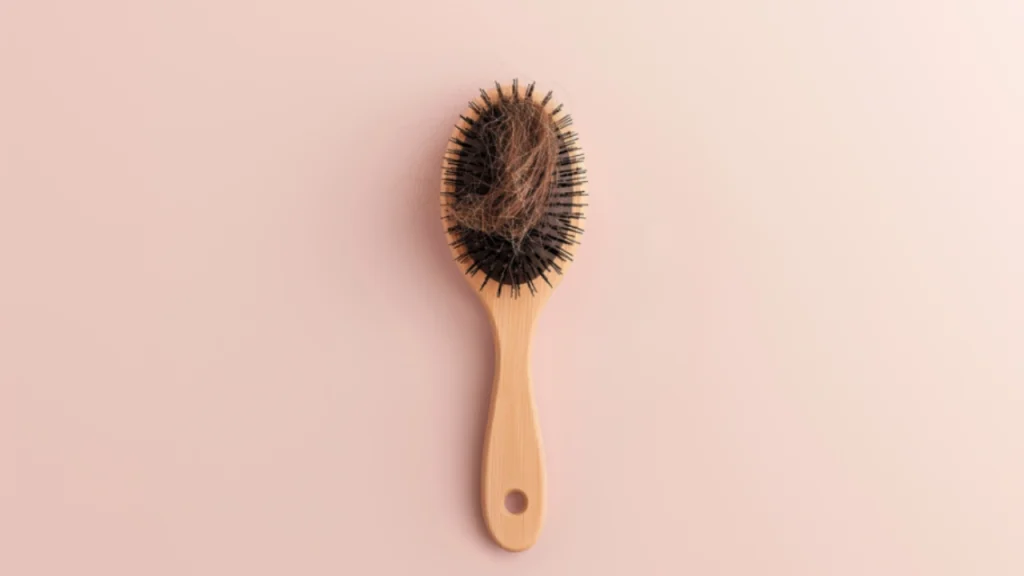
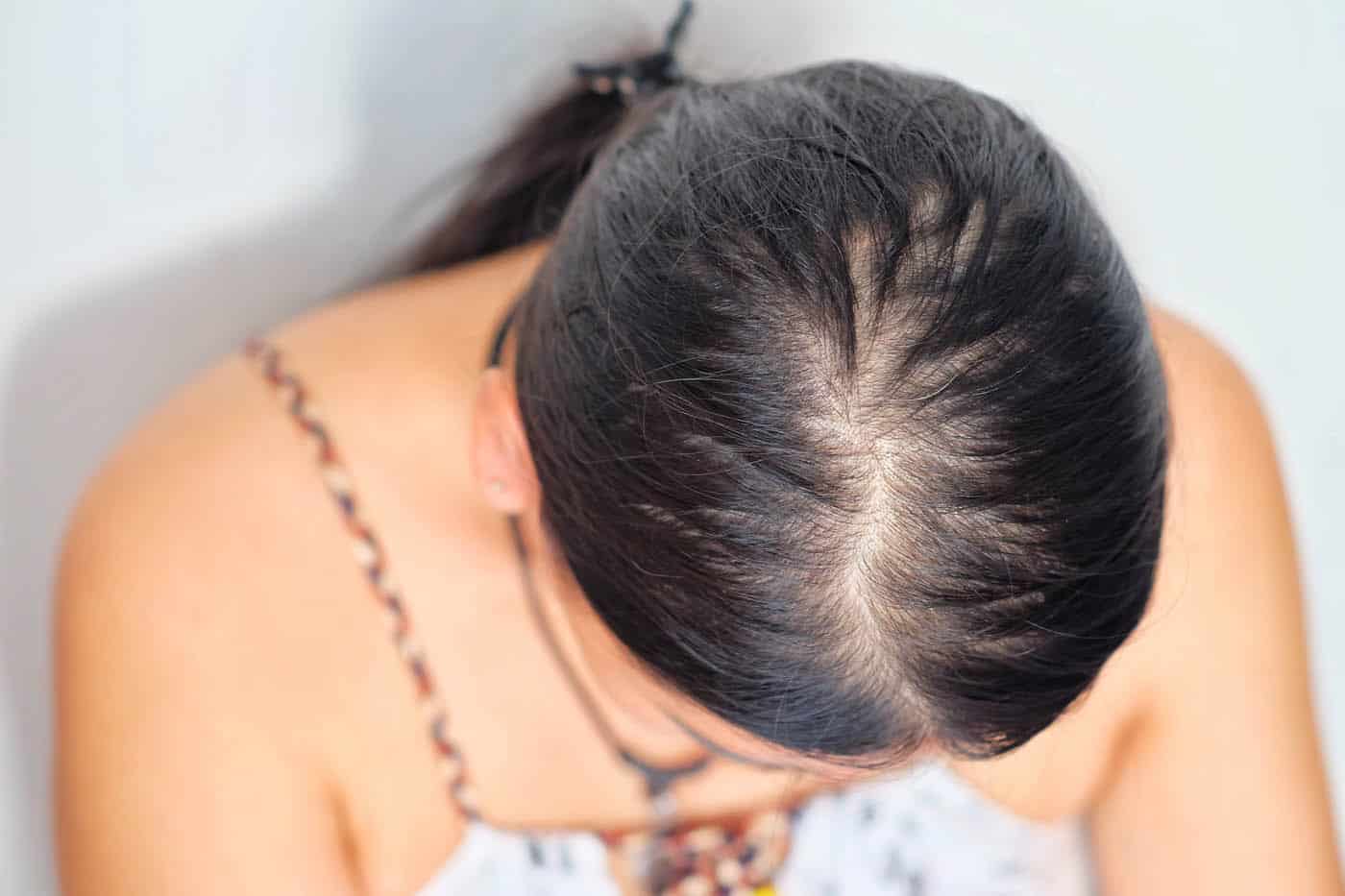
If you suddenly notice that more hair accumulates on your brush each time you comb your hair, on your pillow, or all over the floor after giving birth, you are experiencing postpartum hair loss. In fact, postpartum hair loss is a natural process and quite common. According to the American Pregnancy Association, hair loss after pregnancy affects 40 to 50 percent of women.
Hair loss is an unpleasant experience. It can reduce a person’s self-confidence, especially since hair is an important part of personal image and how others perceive you. Moreover, the recovery time and the cost of treatment can also be significant.
This article will provide all you need to know about postpartum hair loss: how long it lasts, its causes, whether hair shedding can be treated, and how to prevent it.
When does postpartum hair loss start and end?
Signs of postpartum hair loss do not start immediately after you give birth. Instead, they begin when most other postpartum issues have subsided – about 3 to 4 months after delivery1. This hair loss, also known as telogen effluvium, happens due to hormonal changes in the body during and after pregnancy.
Fortunately, postpartum hair loss doesn’t last forever2. It will take some time for your hair to recover, but you can be reassured that your hair will soon return to its thick and smooth state like before you had your baby. According to the American Academy of Dermatology Association (AAD), most cases of postpartum hair loss significantly improve by the time the baby is 12 months old3. However, this timeline can differ from person to person.
As old hair sheds, new hair grows back in its place. Most women return to their pre-pregnancy hair thickness by their baby’s first birthday. A small number may notice slightly finer hair after full recovery, which is normal and not a cause for concern.
What causes postpartum hair loss?
Hormonal changes
Hormonal changes are the main cause of losing hair at postpartum period
Normally, hair goes through four main stages of growth: the growing phase (anagen), the regression phase (catagen), the resting phase (telogen) – during which the hair stops growing, and finally the shedding phase (exogen) – shedding an average of 100 strands a day4.
During pregnancy, a woman’s body produces a large amount of hormones, specifically estrogen. “There are lots of hormonal shifts happening, and one thing that those hormonal shifts do is promote hair growth,” Dr. Shah explains. The increase in estrogen helps keep hair in the growing phase (anagen) longer than usual. This explains why most mothers feel their hair is thicker and smoother, especially in the last three months of pregnancy. In fact, it’s not that there is more hair growing; rather, the hair is just not shedding.
At postpartum, estrogen levels in your body start to drop significantly. This rapid decline causes the previously thick and beautiful hair to enter the resting phase (telogen), and then the shedding phase (catagen). As a result, a large amount of hair begins to shed at once, usually about 3 to 4 months later. So, instead of shedding an average of 100 strands a day, you might shed 300 strands a day. You may notice the most obvious signs of hair loss when brushing or washing your hair. This phenomenon is called telogen effluvium.
Health issue
“Thyroid problems, anemia, stress and hormonal imbalances can also cause hair loss and may need additional evaluation and treatment,” says Dr. Roskin.
Thyroid problems: Postpartum thyroid disorders, such as hypothyroidism (too little thyroid hormone) or hyperthyroidism (too much thyroid hormone), can lead to hair loss. The thyroid gland regulates many physiological processes in the body, including hair growth rate. When the thyroid does not function normally, hair loss occurs more rapidly.
Postpartum rage and stress: This psychological issue forces many hair follicles into the telogen phase where hair growth stops and new hair is not produced. Then, after a few months, these hairs begin to shed.
Anemia or iron deficiency: Iron is a mineral needed for blood clotting and to make red blood cells that transport oxygen around the body, including the hair roots. When the body lacks iron, the oxygen supply to hair follicles decreases, weakening the hair from the root and making it prone to breakage. During and after pregnancy, women are at high risk of iron deficiency anemia because the demand for iron increases to nourish the fetus and prepare for blood loss during delivery. If iron is not adequately supplemented, anemia can occur and lead to more hair loss than usual
Are there any treatments for postpartum hair loss?
Unluckily, there is no certain treatment for postpartum shedding. However, there are some tips you can consider as treatments to minimize hair shedding as follow:
- Use gentle shampoos and conditioners: Heavy hair care products may contain strong chemicals that irritate the scalp, build up on it, and clog hair follicles. This makes hair heavier and when brushing or styling is done, they are more likely to break.
- Change your hairstyle: One of the suggestions is that you can try to change their hairstyle or choose for short hair as a solution for postpartum hair loss. Short hairstyles reduce pressure on hair follicles, thus preventing hair loss from getting worse. You can also ask a hairstylist to choose styles that cover thinning areas. Be free to try new styles, but stay away from styles that put more pressure on the scalp.
- Use volumizing products: These products contain ingredients like proteins that coat the hair. Therefore, they can temporarily improve the appearance of your hair, making it look thicker and fuller. Note that always opt for products that do not contain sulfate or paraben and ensure that you only use the products on the head region to block hair follicles.
- Taking hair accessories: A headband, scarf, bandana, or even a wig are all practical and fashionable options for concealing hair loss after childbirth. They are particularly useful to new parents who cannot spend too much time on their hair.
One safety note for new parents: shed hairs can occasionally wrap around a baby’s fingers or toes, a situation known as a hair tourniquet. If this happens, gently unwind the strand or use small scissors to remove it. See a doctor if the hair is too tight to remove at home.
How to prevent postpartum hair loss?
Although postpartum hair loss is a natural process and unavoidable, there are several things you can do to reduce hair loss and promote hair growth. These include changes in your lifestyle and using natural remedies.
Change in lifestyle
- Balanced diet plus nutrient supplementation: Maintaining a healthy and balanced diet is important to help your hair stay healthy. A healthy diet here means eating plenty of proteins, vitamins, fibers, and minerals found in fruits, vegetables, grains, and meats. You can also use supplements like biotin, iron, zinc, and vitamins B, C, and D to support hair recovery.
- Be gentle with your hair: Opt for loose hairstyles or gentle ties. Avoid tight hairstyles like ponytails or braids, brushing your hair too harshly, or dying hair. Also, limit the use of heat styling tools such as hair dryers or curling irons.
- Maintain a healthy lifestyle: Ensuring adequate and quality sleep, and minimizing stress are not only good for overall health but also beneficial for hair health.
Natural remedies
Many women use natural remedies on their scalp or hair to maintain healthy hair.
- Natural Oils: Including coconut, olive, avocado, almond, tea tree, sesame, rose hip, and watercress oils.
- Ginger Root: Smash, boil, and apply once cool to help stimulate hair growth.
- Roman Nettle Leaf: Smash and mix with olive oil for application.
- Aloe Vera: Known for its soothing properties, aloe vera can reduce dandruff and unclog hair follicles blocked by excess oil.
- Fish Oil: Rich in omega fatty acids that can strengthen hair.
- Tea Leaves: Green tea is rich in antioxidants, which can promote hair growth and prevent hair loss.
- Chamomile or Hibiscus Flowers: Boil in water and apply once cool to soothe the scalp.
- Mustard: Mix with honey for use on the scalp.
When to See a Doctor
Postpartum hair loss is temporary and very common. As old hairs shed, your body grows new ones in their place, and most women find their hair returns to its normal thickness by their baby’s first birthday. For other essentials during the postpartum period, see our guide to the best postpartum products for new moms.
If your hair loss feels severe or has not improved by six months postpartum, check in with your healthcare provider. Conditions like iron deficiency or a thyroid disorder can cause similar shedding and need separate treatment. If your hair has not returned to normal after one year, a dermatologist can help identify any underlying causes and discuss next steps.
Sources
- Mirallas O, Grimalt R (2016). The postpartum telogen effluvium fallacy. Skin Appendage Disord
↩︎ - Rebora A (2019). Telogen effluvium: A comprehensive review. Clin Cosmet Investig Dermatol ↩︎
- American Academy of Dermatology Association (AAD). Hair loss in new moms ↩︎
- J Clin Med (2023). Integrative and Mechanistic Approach to the Hair Growth Cycle and Hair Loss ↩︎


![[variety of unsafe pregnancy foods including raw sushi deli meat soft cheese and raw eggs on a kitchen counter]](https://babiesparent.com/wp-content/uploads/2026/03/1_Unsafe_pregnancy_foods_202603301142-768x429.webp)