The first trimester of pregnancy covers weeks 1 through 12 and builds every major organ your baby will ever have. Your body looks the same from the outside during these early weeks. Inside, hormone levels surge by thousands of percent, cells divide at explosive speed, and the embryo transforms from a single fertilized cell into a fully formed fetus with a beating heart, functioning kidneys, and recognizable human features.
This week-by-week guide breaks down the exact developmental milestones, symptom timelines, and critical health decisions that define each stage of the first trimester.
Weeks 1 and 2: Before Conception Begins
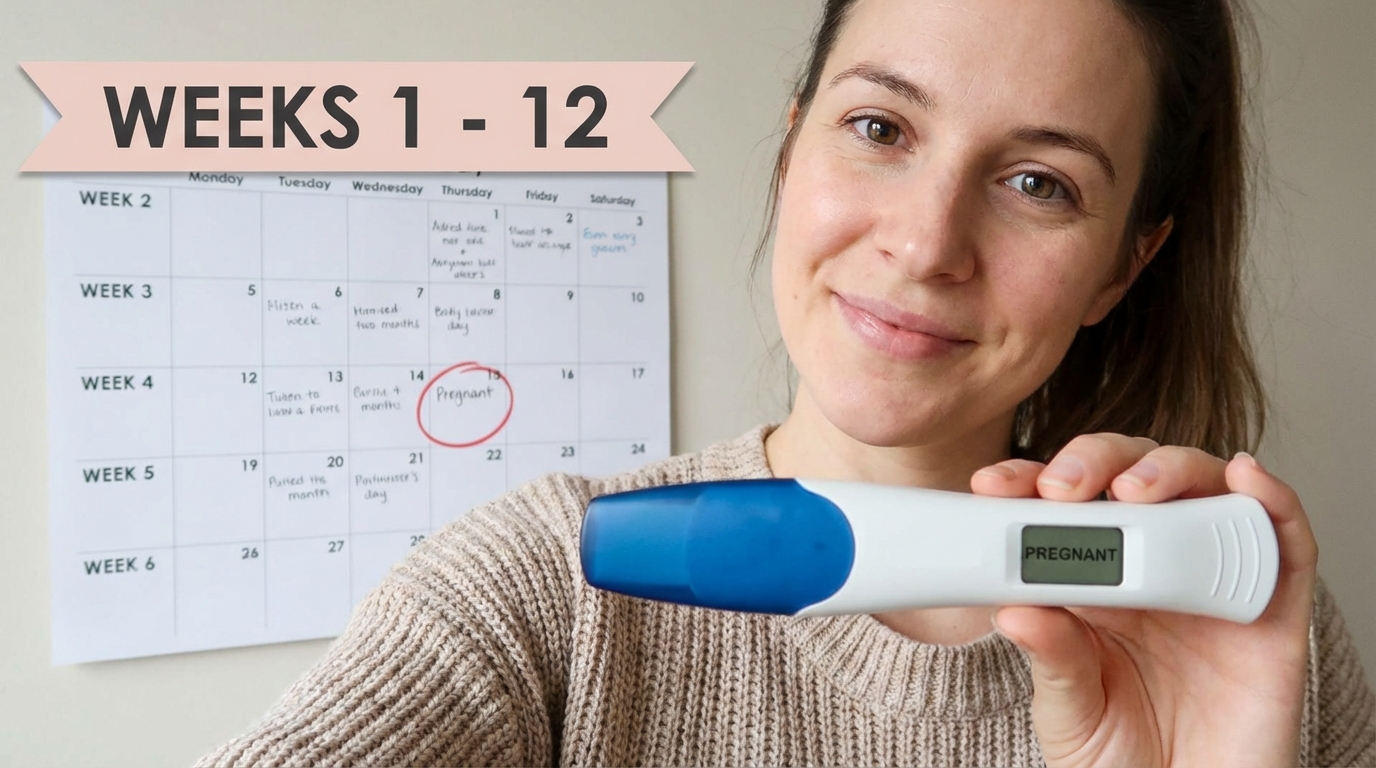
Your pregnancy timeline starts before you actually conceive. Doctors calculate gestational age from the first day of your last menstrual period (LMP), so “week 1” technically begins on the day your period starts [1].
During these two weeks, rising estrogen levels thicken the uterine lining and prepare your ovaries to release a mature egg. Ovulation typically occurs around day 14 of a 28-day cycle. The released egg survives for only 12 to 24 hours inside the fallopian tube, creating a narrow fertilization window.
What You Can Do Right Now
Start a prenatal vitamin containing at least 400 micrograms of folic acid. The neural tube forms within the first 28 days after conception, often before most women realize they are pregnant. Folic acid intake during this preparatory phase reduces neural tube defects by up to 70%, according to the Centers for Disease Control and Prevention.
Taking prenatal supplements before conception gives your body the folate reserves it needs before the embryo even exists.
Week 3: Fertilization and Cell Division
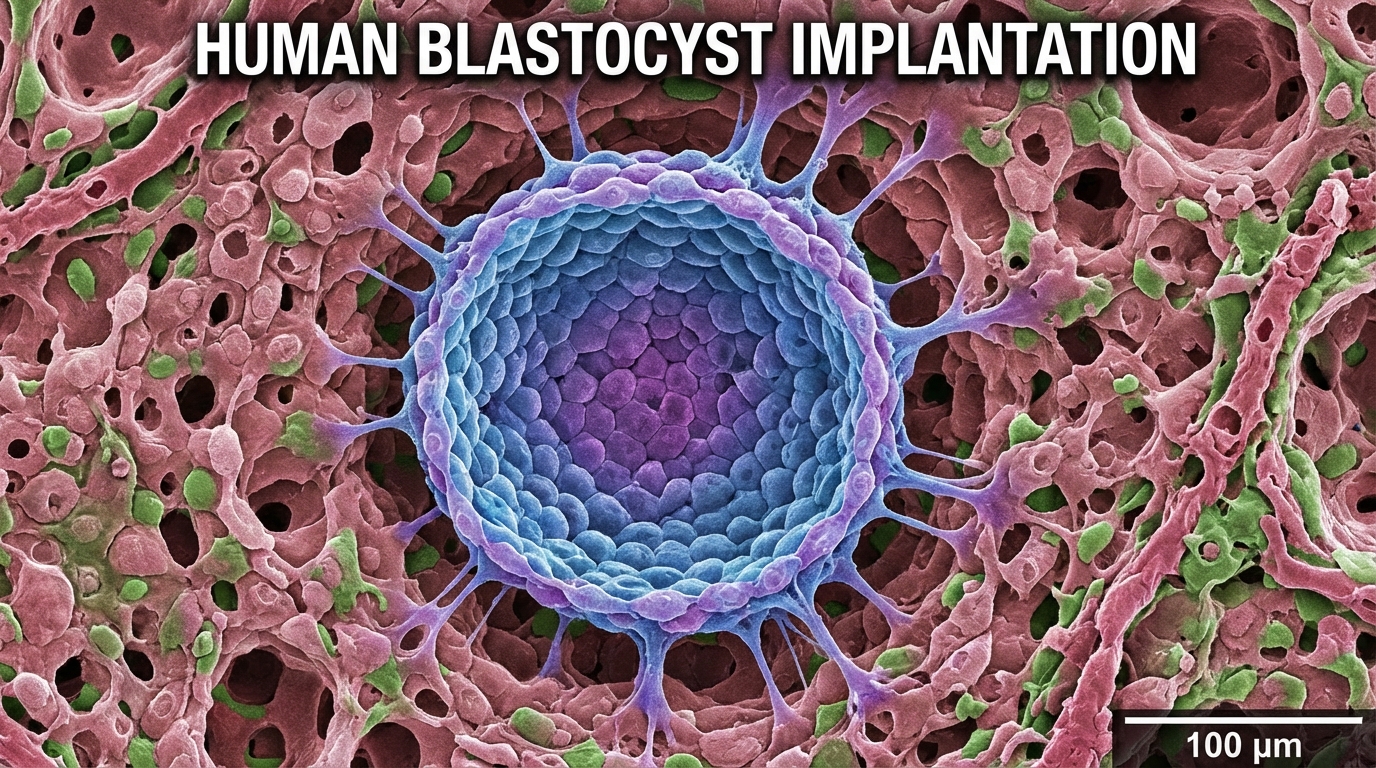
Sperm meets egg inside the fallopian tube, creating a single-celled zygote. This zygote immediately begins dividing: 2 cells become 4, then 8, then 16. By day five, the cell cluster forms a hollow ball called a blastocyst containing roughly 70 to 100 cells [2].
The blastocyst has two distinct layers. The outer layer (trophoblast) will become the placenta. The inner cell mass will become your baby. At this stage, the entire structure measures about 0.1 millimeters, smaller than the period at the end of this sentence.
Week 4: Implantation Changes Everything
The blastocyst burrows into the thickened uterine lining between days 6 and 10 after fertilization. This implantation moment triggers the release of human chorionic gonadotropin (hCG), the hormone that stops your menstrual cycle and produces a positive pregnancy test.
Understanding hCG Levels
hCG levels rise rapidly during early pregnancy. At week 4, typical levels range from 5 to 426 mIU/mL. These numbers double approximately every 48 to 72 hours during healthy pregnancies. By week 6, levels can reach 1,080 to 56,500 mIU/mL [3].
Some women notice very light spotting called implantation bleeding during this week. The spotting lasts one to two days and appears pink or light brown, not the bright red flow of a normal period. Recognizing these early physical signs of conception helps you distinguish implantation from a late period.
Weeks 5 and 6: First Heartbeat and First Symptoms
Week 5 marks the beginning of embryonic organ formation. The neural tube folds closed to create the foundation of the brain and spinal cord. A tiny cardiac tube forms and begins contracting with a primitive heartbeat at approximately 110 beats per minute.
For the mother, this is when symptoms hit hard. Surging progesterone and hCG cause:
- Nausea and vomiting (affects 70% to 80% of pregnant women)
- Extreme fatigue that sleep does not fully relieve
- Breast tenderness and swelling from increased blood flow
- Frequent urination as blood volume expands by 50%
- Food aversions triggered by a heightened sense of smell

Managing Nausea Safely
Eat five to six small meals per day instead of three large ones. Keep plain crackers beside your bed and eat a few before standing up in the morning. Ginger tea and vitamin B6 (25 mg three times daily) are evidence-based nausea remedies.
Many mothers instinctively reach for standard painkillers or cold medicines to handle early pregnancy discomfort. Fetal organs are at their most vulnerable stage during weeks 5 through 8. You must check which medications remain safe during pregnancy before taking anything from your medicine cabinet.
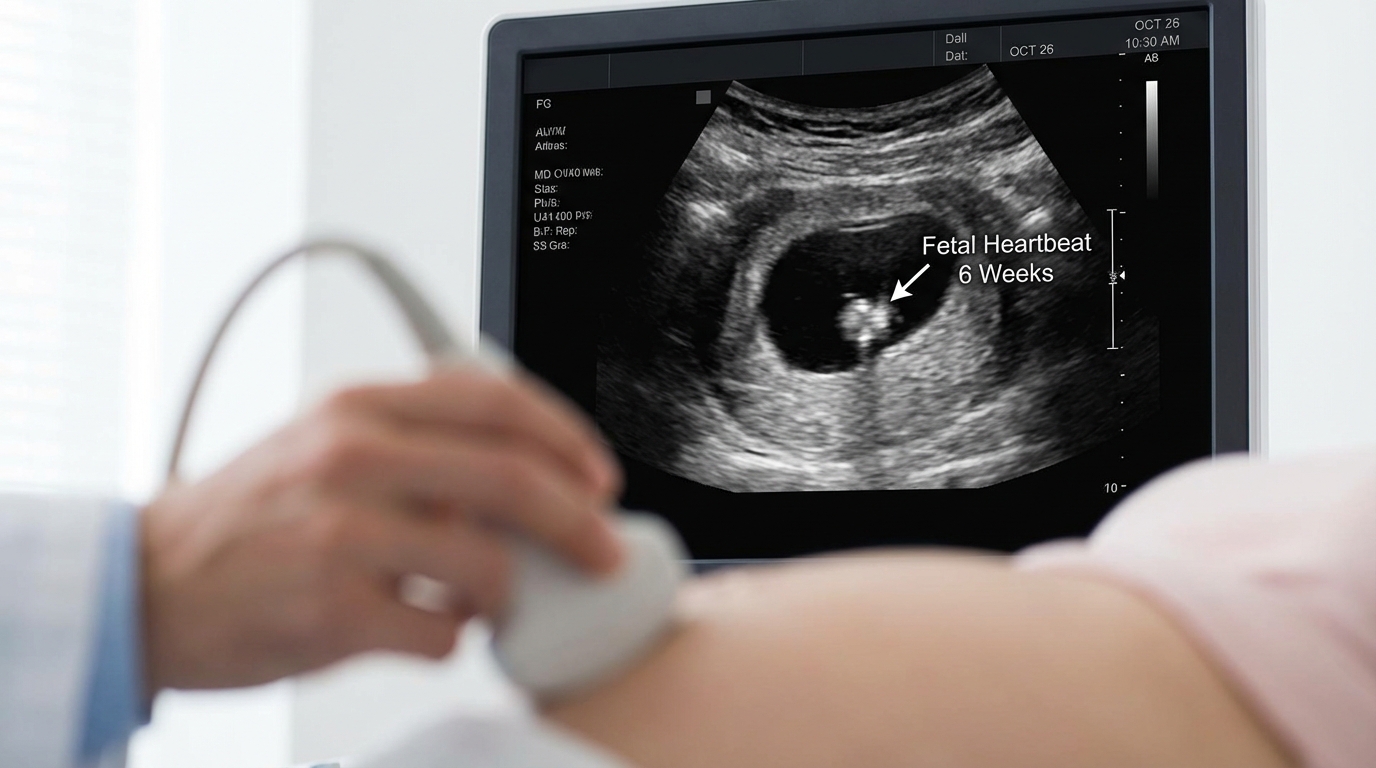
Around week 6, your doctor will schedule your first transvaginal ultrasound to confirm the embryo implanted inside the uterus and to detect cardiac activity. Seeing the heartbeat on the monitor reduces the risk of miscarriage from approximately 10% down to 3% to 5%.
Weeks 7 to 9: Rapid Organ Construction
Your baby’s development accelerates dramatically during the seventh through ninth weeks.
Week-by-Week Size Comparison
| Week | Baby’s Size | Length (Crown to Rump) |
|---|---|---|
| 7 | Blueberry | 10 mm |
| 8 | Raspberry | 16 mm |
| 9 | Grape | 23 mm |
By week 7, the embryo develops distinct facial features. Dark spots mark where the eyes will open, and small depressions form the nostrils. Arm and leg buds extend outward, and the webbed fingers begin to separate into individual digits.
Week 8 brings the formation of the upper lip, the tip of the nose, and the eyelids. The intestines grow so quickly that they temporarily protrude into the umbilical cord because the abdominal cavity is still too small to hold them.
By week 9, all four heart chambers are present and functioning. The embryo can flex its elbows and curl its toes. Tiny fingernails start forming at the fingertips [2].
What the Mother Feels
Nausea and fatigue peak between weeks 8 and 10. Your body is redirecting enormous metabolic energy into building the placenta, which acts as the permanent life-support system for the fetus.
Dietary aversions are common during this peak hormone phase. Some women crave very specific foods or seek natural remedies for nausea-related throat irritation. Raw or unpasteurized foods carry higher bacterial risks during pregnancy. Check food safety guidelines for raw products before adding new items to your diet.
Weeks 10 to 12: The Embryo Becomes a Fetus
Week 10 marks a major developmental milestone. The embryo officially graduates to fetal status. Every vital organ, including the kidneys, liver, brain, and intestines, has formed and begun functioning. The remaining months of pregnancy focus on growth and maturation rather than building new structures [1].
Developmental Milestones at the End of the First Trimester
| Week | Key Development | Baby’s Size |
|---|---|---|
| 10 | All organs formed; embryo becomes fetus | Kumquat (31 mm) |
| 11 | Bones begin to harden; tooth buds appear | Fig (41 mm) |
| 12 | Reflexes emerge; fetus can open and close fingers | Plum (54 mm) |
By week 12, the fetus weighs approximately 14 grams and measures about 5.4 centimeters from crown to rump. The face looks unmistakably human. The eyes have moved from the sides to the front of the head, and the ears are nearly in their final position.
The Hormonal Shift at Week 12
The placenta assumes full control of hormone production from the ovaries at the end of the first trimester. This transition causes a measurable drop in nausea, fatigue, and breast tenderness for most women. The relief is not gradual. Many mothers describe it as a sudden return of energy within a single week.
Physically, your uterus expands upward past the pelvic bone into the lower abdominal cavity. First-time mothers often ask when the baby bump becomes visible to others. The fundus (top of the uterus) rising above the pubic bone is the exact anatomical event that creates your first visible bump, typically between weeks 12 and 16.

First Trimester Miscarriage Risk by Week
Understanding the statistical reality of miscarriage risk helps reduce anxiety during the early weeks.
| Gestational Period | Estimated Miscarriage Risk |
|---|---|
| Weeks 1 to 4 | Highest (includes chemical pregnancies) |
| Weeks 5 to 8 | 5% to 10% |
| Weeks 9 to 12 | 3% to 5% |
| After week 12 | Less than 2% |
Approximately 80% of all miscarriages occur within the first 12 weeks. The majority result from random chromosomal abnormalities in the embryo, not from anything the mother did or failed to do [4]. Once your doctor confirms a healthy fetal heartbeat on ultrasound, the statistical odds shift heavily in your favor.
When to Call Your Doctor During the First Trimester
Contact your healthcare provider immediately if you experience any of the following:
- Heavy vaginal bleeding (soaking a pad within an hour)
- Severe abdominal or pelvic pain on one side
- Fever above 100.4°F (38°C) that does not resolve
- Persistent vomiting that prevents you from keeping down any fluids for 24 hours
- Dizziness or fainting spells
These symptoms do not automatically indicate a problem, but they require clinical evaluation to rule out ectopic pregnancy, infection, or other complications.
Conclusion
The first twelve weeks build every organ, establish the placental life-support system, and subject your body to the most intense hormonal changes of the entire pregnancy. Understanding the exact biological timeline behind each symptom gives you the confidence to manage discomfort and protect the critical development happening out of sight. Schedule your first prenatal appointment as soon as you get a positive test, and track your symptoms week by week to stay one step ahead.
References
[1] Mayo Clinic. (2024). “Fetal development: The 1st trimester.” Retrieved from mayoclinic.org
[2] American College of Obstetricians and Gynecologists (ACOG). (2024). “How Your Fetus Grows During Pregnancy.” Retrieved from acog.org
[3] American Pregnancy Association. (2024). “hCG Levels During Pregnancy.” Retrieved from americanpregnancy.org
[4] Healthgrades. (2024). “Miscarriage Statistics by Week.” Retrieved from healthgrades.com



![[variety of unsafe pregnancy foods including raw sushi deli meat soft cheese and raw eggs on a kitchen counter]](https://babiesparent.com/wp-content/uploads/2026/03/1_Unsafe_pregnancy_foods_202603301142-768x429.webp)