The two-week wait has a way of making your body feel like a mystery you’re trying to solve in real time.
Every unfamiliar twinge, every wave of tiredness, every moment of queasiness raises the same question: Is this it? The honest answer is that most early pregnancy symptoms are nearly identical to PMS — because the same hormones drive both. But there are patterns worth knowing: when certain signs appear, how they differ in character, and which ones are more distinctively pregnancy-related.
This guide covers the 10 most common early signs of pregnancy before a missed period, when each one tends to show up in your cycle, and what actually helps tell them apart from PMS symptoms.
Why Early Pregnancy Symptoms Feel So Much Like PMS
Before getting into individual signs, it helps to understand why this overlap exists in the first place.
After ovulation, your body produces progesterone — regardless of whether a fertilized egg has implanted or not. This progesterone rise is what causes the familiar pre-period symptoms: breast tenderness, bloating, mood shifts, and fatigue. The same hormone is also elevated in early pregnancy, which is why the first week or two after ovulation rarely offers any clear clues.
Pregnancy-specific symptoms only begin after implantation, which typically happens 6 to 12 days after fertilization. Once the embryo successfully implants, it starts producing hCG (human chorionic gonadotropin) — the hormone that pregnancy tests detect1. As hCG rises, it drives more noticeable changes: intensified breast tenderness, nausea, heightened smell sensitivity.
The practical takeaway: symptoms in the first 1 to 5 days past ovulation (DPO) are almost certainly not pregnancy-specific. Signs that appear 7 DPO or later have more potential to be meaningful — but they can still be identical to PMS until you take a test.
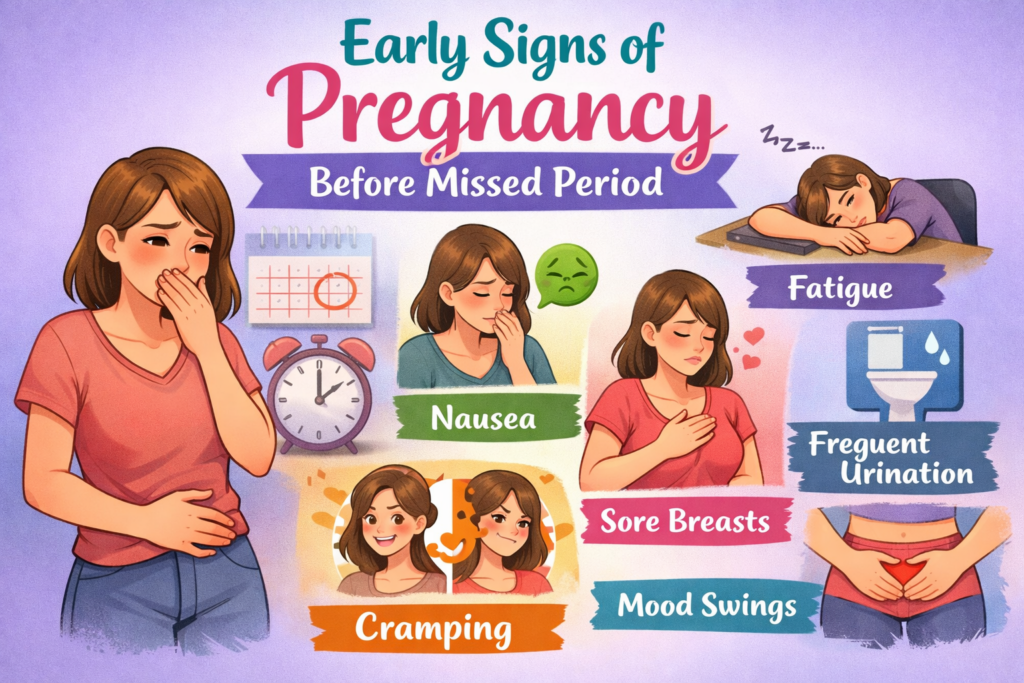
10 Early Signs of Pregnancy Before a Missed Period
1. Implantation Bleeding or Spotting
One of the most distinctively early-pregnancy signs, implantation bleeding occurs when the fertilized egg attaches to the uterine lining — usually between 6 and 12 days after fertilization2.
About 1 in 4 pregnant women experience it, so it’s common enough to watch for — but not universal. What it looks like:
- Light spotting or discharge (not a flow)
- Color: pink, brown, or rust-colored — rarely bright red
- Duration: a few hours to 2 days at most
- No clots or progression to heavier bleeding
How to tell it from a period: Implantation bleeding is noticeably lighter — more of a slight stain than a period — and it doesn’t progress or increase in flow. It also tends to appear earlier in your cycle than a period would.
2. Breast Tenderness and Changes
Breast soreness is one of the earliest and most commonly reported pregnancy symptoms, often beginning around 6 to 14 days past ovulation. The estrogen and progesterone surge that follows implantation prepares your breasts for eventual milk production — which is what drives the tenderness, heaviness, and tingling that many women notice.
Other changes to look for: areolas (the area around the nipple) may darken or enlarge, and some women notice veins becoming more visible under the skin.
PMS comparison: Breast tenderness before a period is also very common, but pregnancy-related tenderness is often described as more intense, more persistent, and less likely to ease as your period approaches. If the soreness continues rather than resolving, that’s a meaningful pattern.
3. Unusual Fatigue
This kind of tiredness feels qualitatively different from needing a good night’s sleep. Many women describe it as a heavy, all-pervading exhaustion that makes ordinary activities feel like effort.
Several things drive it: progesterone has a natural sedating effect; your body is also rapidly increasing blood volume, producing more red blood cells, and diverting energy to support early embryonic development3.
Fatigue can appear as early as 1 to 2 weeks after conception. PMS comparison: PMS fatigue is real, but pregnancy fatigue tends to be more extreme and harder to push through, even after adequate sleep.
4. Mild Cramping or Twinges
Some women feel a dull ache, mild cramping, or brief twinges in their lower abdomen around the time of implantation (roughly 6 to 12 DPO). These implantation cramps are usually milder than typical period cramps and may feel slightly different in character — lighter, briefer, or one-sided.
Timing clue: If cramping appears a week or more before your period is due, that’s worth noting. Period cramps typically start much closer to (or at the onset of) menstruation.
5. Nausea
The classic pregnancy symptom — though calling it “morning sickness” is a misnomer, since it can strike at any time of day or night. Nausea in pregnancy is primarily driven by rising hCG levels and typically begins around 4 to 6 weeks of pregnancy (roughly 2 to 4 weeks after conception)4.
This means most women won’t feel nauseous before their missed period — but some do, particularly those with rapidly rising hCG. Nausea affects around 70% of pregnant women and peaks around weeks 9 to 10 before typically easing.
PMS comparison: Nausea can occur before a period, but it’s more commonly and more intensely associated with pregnancy.
6. Frequent Urination
Pregnancy causes a significant increase in blood volume, which means your kidneys filter more fluid — and your bladder fills more often. Most women notice this increasing around 6 weeks of gestation, though some observe it earlier.
PMS comparison: Frequent urination is rarely a PMS symptom, making this one of the more pregnancy-specific signs on this list — particularly when it appears alongside other early signals.
7. Heightened Sense of Smell and Food Aversions
A sudden sensitivity to smells — foods, perfumes, or scents that never bothered you before — is one of the more distinctively pregnancy-associated early symptoms. It can also accompany strong food aversions (being unable to stand foods you normally enjoy) or new cravings. The mechanism isn’t fully understood but is linked to estrogen and hCG.
PMS comparison: This level of smell sensitivity is rarely a PMS symptom. When women report it in combination with other early signs, it tends to carry more diagnostic weight.
8. Mood Swings
Rapid hormonal fluctuations — particularly the dramatic rise and fall of estrogen and progesterone — affect neurotransmitter levels and can cause noticeable emotional instability: irritability, weepiness, anxiety, or feeling unusually sensitive.
PMS comparison: This symptom overlaps almost entirely with PMS. Mood swings alone are not a meaningful distinguishing sign.
9. Bloating
Progesterone relaxes smooth muscle throughout the body, including in the digestive tract. This slows the movement of food, which can cause gas, bloating, and a feeling of fullness — similar to what many women experience before a period.
PMS comparison: Hard to distinguish from pre-period bloating without other signs. Better read as part of an overall picture rather than on its own.
10. Sustained Elevated Basal Body Temperature (BBT)
This sign is only meaningful if you’ve already been tracking your BBT (basal body temperature) throughout your cycle. After ovulation, progesterone keeps your resting temperature elevated by 0.4 to 1.0°F. In a non-pregnant cycle, this temperature typically drops before your period begins.
The pregnancy indicator: If your BBT remains elevated for 18 or more consecutive days past ovulation, with no period arriving, that’s a strong pattern worth noticing5.
For women using ovulation tracking as part of TTC, knowing the signs of ovulation you should not ignore makes your BBT data more meaningful — because accurate ovulation detection gives you a reliable DPO count.
PMS or Pregnancy? How to Tell the Difference
This is the question most women in the two-week wait are asking. The honest answer: most symptoms alone cannot reliably tell you.
| Symptom | PMS | Early Pregnancy |
|---|---|---|
| Breast tenderness | Common, usually milder | Often more intense; may persist longer |
| Cramping | Familiar pre-period ache | May be lighter, earlier in cycle |
| Spotting | Occasional light spotting | Implantation: lighter, shorter, no progression |
| Fatigue | Common | Often more extreme, heavy |
| Nausea | Can occur | More common; may occur earlier in day |
| Frequent urination | Not typical | Can begin around 6 weeks |
| Smell sensitivity | Rarely | More distinctively pregnancy-associated |
| Mood swings | Very common | Very similar — not distinguishing |
| BBT | Drops before period starts | Stays elevated 18+ DPO |
The most meaningful distinctions tend to be: intensity (particularly for breast soreness and fatigue), the presence of smell sensitivity, and timing (implantation signs appearing earlier in the cycle than period symptoms would). When you have several of these signs appearing together — especially at the right DPO — a pregnancy test is the logical next step.
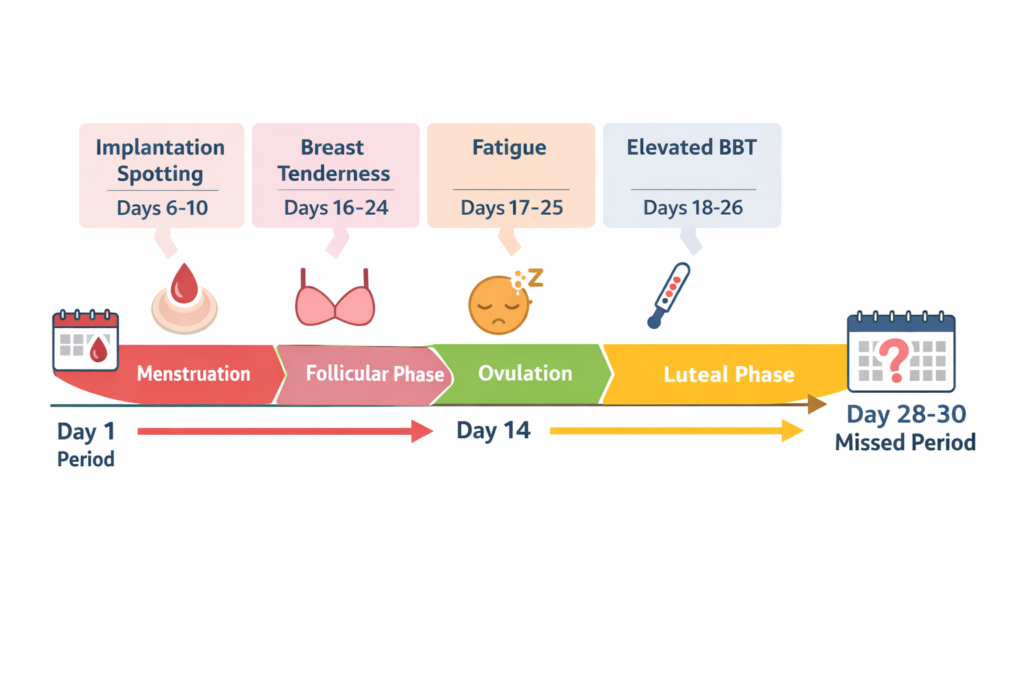
When Do Early Pregnancy Symptoms Start? (DPO Timeline)
| Days Past Ovulation | What’s Typically Happening |
|---|---|
| 1–5 DPO | Post-ovulation progesterone rise — nearly identical to PMS; nothing pregnancy-specific yet |
| 6–10 DPO | Implantation window — some women notice light spotting or twinges; hCG not yet detectable |
| 10–12 DPO | hCG begins rising after implantation; very sensitive tests (≥10 mIU/mL) may detect pregnancy |
| 14 DPO | Missed period; standard tests highly reliable; breast tenderness, fatigue, nausea if present are often more noticeable |
The key insight: your body cannot produce pregnancy symptoms before implantation has occurred. Any symptoms in the first 1 to 5 DPO are driven by your normal post-ovulation hormones, not by pregnancy itself.
Understanding your own cycle timing improves how you read these signs. Learning how to track ovulation at home gives you an accurate DPO count, which makes the timing of any symptoms much more meaningful.
When Should You Take a Pregnancy Test?
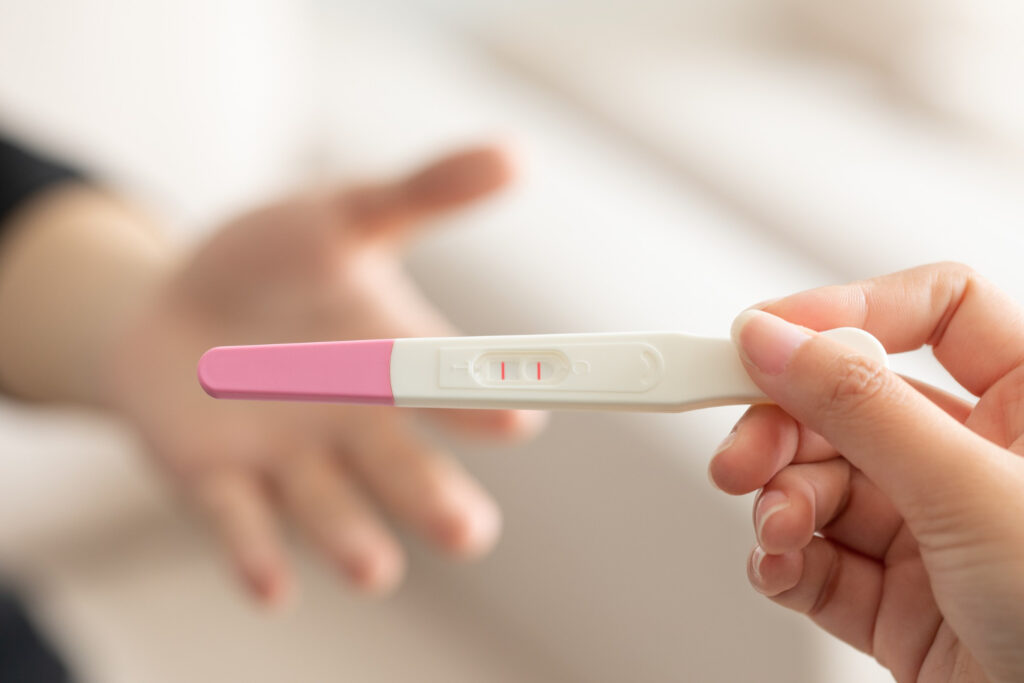
- Most accurate: the day of your missed period or after — hCG levels are high enough that standard tests are reliable for most women
- Early testing: if you’re using a sensitive test (≥10 mIU/mL sensitivity), 10 to 12 DPO may produce a faint positive — but false negatives are common if you test before 12 DPO
- Best time of day to test: first morning urine, when hCG is most concentrated
- Negative result before your period: test again 2 to 3 days later if your period hasn’t arrived — hCG doubles approximately every 48 to 72 hours in early pregnancy
If your cycles are irregular, timing a test based on cycle days is less reliable. In that case, testing by DPO (if you know when you ovulated) or after at least 14 days since unprotected sex tends to give more accurate results6.
If it’s been more than 12 months of trying to conceive (or 6 months if you’re 35 or older) without a positive result, talking with your doctor is a good next step. Understanding how long it typically takes to get pregnant can also help put your timeline in perspective.
Frequently Asked Questions
How early can I feel pregnancy symptoms?
Some symptoms — like breast tenderness, mild fatigue, and bloating — can appear as early as 6 to 10 DPO, around the time of implantation. However, these overlap with PMS and are not reliably distinguishable this early. Most women notice more definitive signs around the time of their missed period.
Can I have pregnancy symptoms at 1 week?
At 1 week past ovulation (7 DPO), implantation is still happening or just completed for many women. Any symptoms at this stage are more likely due to post-ovulation progesterone than to pregnancy itself. Implantation spotting or mild cramping is possible but not guaranteed, and hCG is not yet detectable.
What does implantation bleeding look like?
Implantation bleeding is typically light spotting — pink, brown, or rust-colored discharge — that lasts a few hours to no more than 2 days. It is noticeably lighter than a period, does not progressively increase, and contains no clots. Not all pregnant women experience it; its absence doesn’t mean implantation hasn’t occurred.
I have all these symptoms but a negative test — what does that mean?
If you’ve tested before day 14 past ovulation, a negative result may simply mean hCG is not yet high enough for detection — not that you’re not pregnant. Test again 2 to 3 days later. If your period arrives, the symptoms were most likely PMS. If it doesn’t, and the test is still negative, consult your healthcare provider.
The Bottom Line
The honest truth about early pregnancy symptoms is that they’re genuinely hard to read before a missed period. Your body produces the same hormones whether you’re pregnant or in the pre-period phase — which makes almost every symptom ambiguous on its own.
What you can do is pay attention to patterns: symptoms that feel more intense than your usual PMS, signs that appear earlier in your cycle than expected, the combination of multiple signals together — and most importantly, the timing relative to your ovulation date.
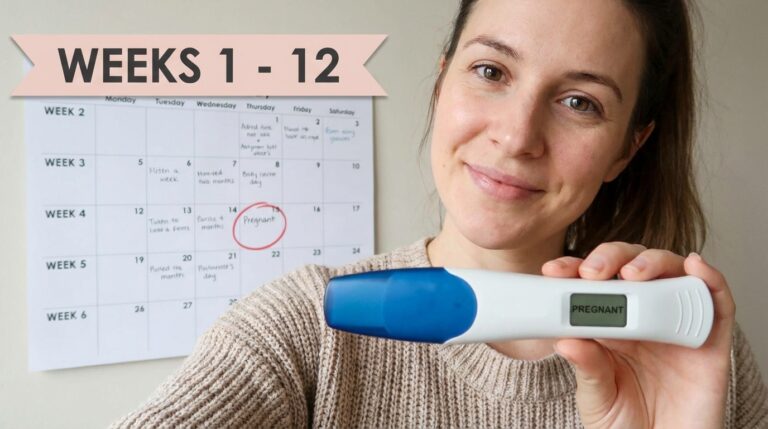
But the only way to actually know is a pregnancy test. If your period is late and you’re experiencing several of these signs, that’s your clearest signal to test.
Whatever the result, the two-week wait is genuinely hard. The questions you’re asking, the close attention you’re paying to your body — none of that is imagining things. It’s just the experience of trying, and that matters.
This article was reviewed for medical accuracy using information from Hopkins Medicine, Cleveland Clinic, Mayo Clinic, What to Expect, and Healthline. Always consult your healthcare provider for personalized guidance.
- Cleveland Clinic. “Implantation Bleeding.” https://my.clevelandclinic.org/health/articles/24703-implantation-bleeding
- Hopkins Medicine. “Early Signs of Pregnancy Before a Missed Period.” https://www.hopkinsmedicine.org/health/wellness-and-prevention/early-signs-of-pregnancy-before-a-missed-period
- What to Expect. “Early Symptoms of Pregnancy.” https://www.whattoexpect.com/pregnancy/symptoms-and-solutions/early-pregnancy-signs-before-a-missed-period.aspx
- Mayo Clinic. “Symptoms of pregnancy: What happens first.” https://www.mayoclinic.org/healthy-lifestyle/getting-pregnant/in-depth/symptoms-of-pregnancy/art-20043853
- What to Expect. “Early Symptoms of Pregnancy.” https://www.whattoexpect.com/pregnancy/symptoms-and-solutions/early-pregnancy-signs-before-a-missed-period.aspx
- Healthline. “17 Early Signs of Pregnancy.” https://www.healthline.com/health/signs-of-pregnancy


![[variety of unsafe pregnancy foods including raw sushi deli meat soft cheese and raw eggs on a kitchen counter]](https://babiesparent.com/wp-content/uploads/2026/03/1_Unsafe_pregnancy_foods_202603301142-768x429.webp)