If you’ve been trying to conceive and tracking a calendar, here’s something that might change your whole approach: the best time to get pregnant isn’t necessarily on ovulation day — it’s often the days before it.
Here’s why: once your egg is released, it survives for just 12 to 24 hours. Sperm, on the other hand, can live inside your body for up to 5 days. That single biological fact reshapes everything about when to time intercourse — and getting this right could make all the difference.
This guide walks you through exactly when your fertile window opens, how to read your body’s signals, and how to use simple tracking methods to give yourself the best chance of getting pregnant each cycle.
What Is the Fertile Window — and Why Does It Open Before Ovulation
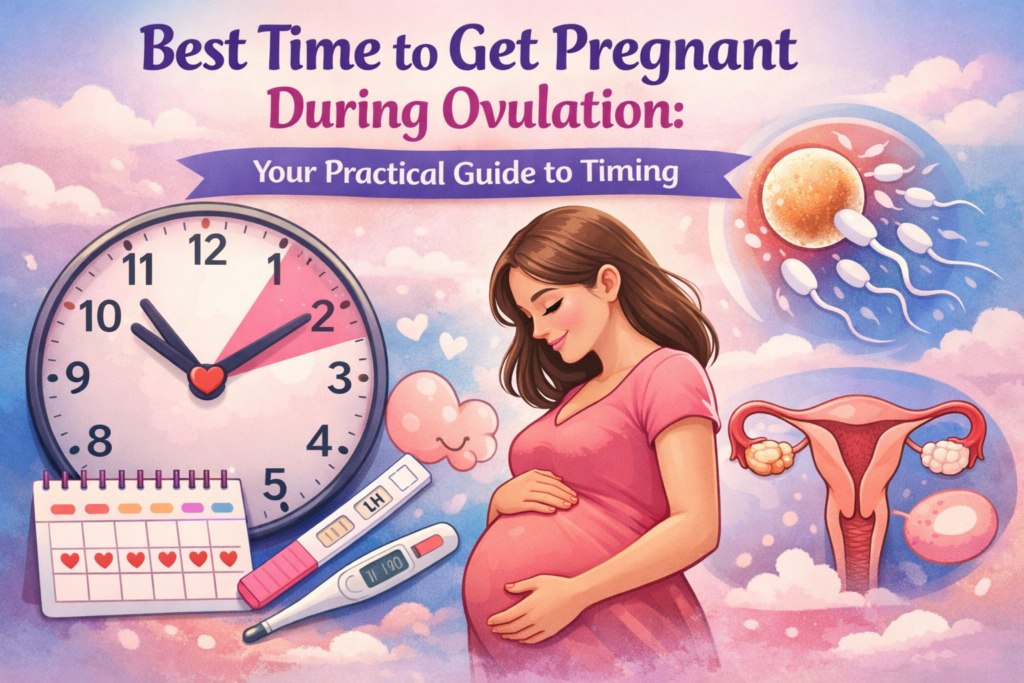
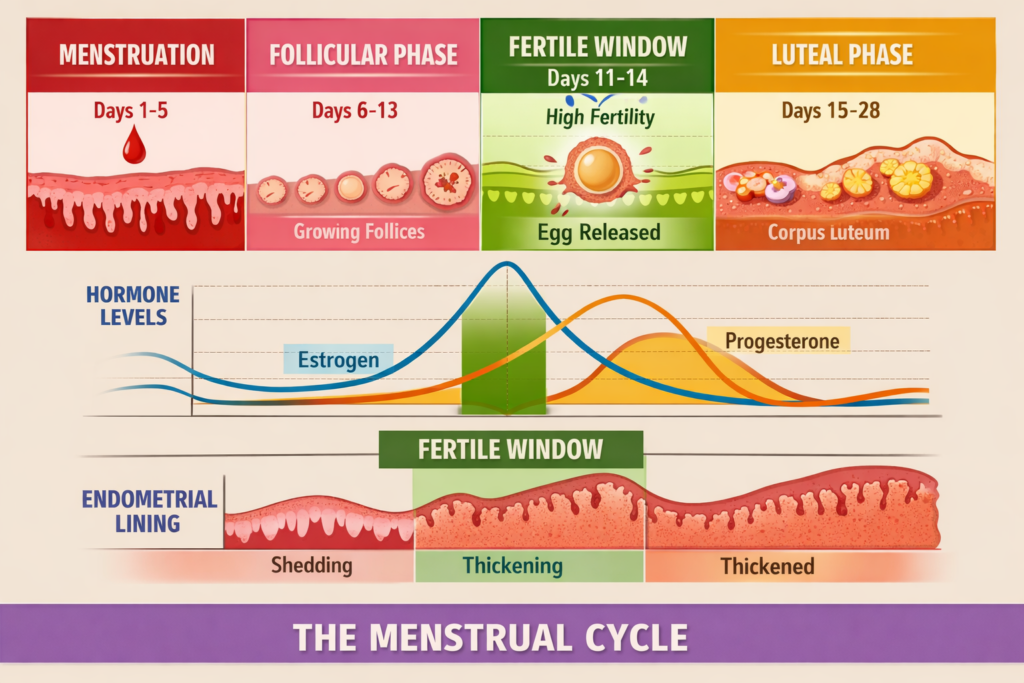
Your fertile window is the only stretch of days in your cycle when conception is biologically possible. It spans 6 days total: the 5 days leading up to ovulation, plus the day of ovulation itself1.
The logic behind a 6-day window comes down to sperm survival. Sperm released during sex can live in your reproductive tract for 3 to 5 days2. That means sperm deposited several days before ovulation can still be viable when your egg arrives — waiting in the fallopian tubes, ready to fertilize.
This is why having sex before ovulation often works better than waiting for ovulation day itself. By the time your egg is released, the window to fertilize it is already closing3.
| Days Relative to Ovulation | Can Conception Happen? |
|---|---|
| 5 days before | Yes – sperm can survive until egg is released |
| 4 days before | Yes |
| 3 days before | Yes |
| 2 days before | Yes – high probability |
| 1 day before | Yes – very high probability |
| Day of ovulation | Yes – peak opportunity |
| 1+ days after | Unlikely – egg has already degraded |
Your Most Fertile Days: When the Odds Are Highest
Not all 6 days of your fertile window are equal. Your chances of conception peak in the 2 to 3 days before ovulation, plus ovulation day itself4. This is the sweet spot most couples should aim for.
When Does Ovulation Happen in Your Cycle?
Ovulation typically occurs about 14 days before your next period begins — not 14 days after your last period started. The difference matters, especially if your cycle isn’t a textbook 28 days5.
| Cycle Length | Estimated Ovulation Day |
|---|---|
| 21 days | Around Day 7 |
| 24 days | Around Day 10 |
| 28 days (average) | Around Day 14 |
| 30 days | Around Day 16 |
| 35 days | Around Day 21 |
Keep in mind: these are estimates based on average cycles. Stress, illness, travel, and hormonal shifts can all push ovulation earlier or later. This is why tracking — not just calendar math — is so important.
5 Signals Your Body Gives Before Ovulation
Your body doesn’t ovulate silently. Learning to recognize these physical changes gives you advance notice — so you can act before ovulation, not after6.
1. Cervical Mucus Becomes Slippery and Clear
This is the most reliable and actionable sign. As ovulation approaches, your cervical mucus shifts from dry or creamy to clear, stretchy, and slippery — often compared to raw egg whites. You’ll notice it when you wipe or in your underwear.
- Dry or sticky – not in your fertile window
- Creamy or white – approaching your fertile window
- Clear, slippery, stretchy – you’re in your fertile window; ovulation is likely 1-2 days away
- Returns to thick and sticky – ovulation has passed
2. A Positive Ovulation Predictor Kit (OPK)
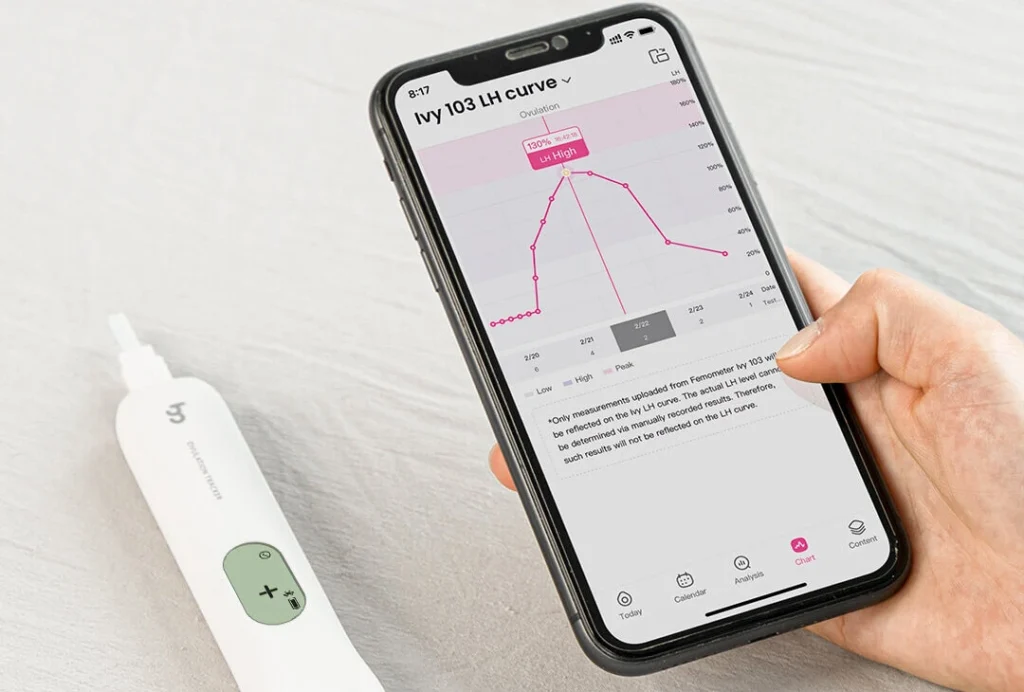
OPKs detect the LH (luteinizing hormone) surge that triggers ovulation. A positive test — where the test line is as dark as or darker than the control line — means ovulation is likely 12 to 48 hours away7. This is your clearest advance signal and your cue to start (or keep) having sex.
3. A Slight Rise in Basal Body Temperature (BBT)
After ovulation, progesterone causes your resting temperature to rise by about 0.5 to 1°F. This shift confirms ovulation happened — but because it’s a retrospective signal, it’s most useful for identifying patterns over several months. After 2 to 3 cycles of charting, you’ll know when ovulation typically falls for you.
4. Mild Cramping on One Side
Called Mittelschmerz (German for “middle pain”), this is a brief, one-sided ache in the lower abdomen. Not everyone notices it, but if you do, it’s a useful real-time signal that ovulation is underway or just finished.
5. A Natural Boost in Libido
Rising estrogen before ovulation often increases sex drive. Your body is biologically aligning your desire with your most fertile days — which is genuinely helpful when you’re trying to conceive.
How to Track Ovulation: Choosing What Works for You
Understanding the signs of ovulation is a start — pairing them with a tracking method makes timing much more reliable. Here’s how each method works:
Ovulation Predictor Kits (OPKs)
Best for: Knowing ovulation is coming 12-48 hours in advance
OPKs are the most actionable tracking tool because they give you advance notice. For a 28-day cycle, start testing around Day 10. Test between 10 AM and 8 PM — first morning urine can give a false result because LH builds through the day. When you see a positive, have sex that evening and again the following morning.
BBT Charting
Best for: Confirming ovulation and recognizing your personal pattern
Take your temperature every morning before getting up, using a basal thermometer, and log it daily. After 2 to 3 months, you’ll see a consistent temperature shift that reveals when in your cycle you tend to ovulate.
Cervical Mucus Observation
Best for: Free, real-time daily feedback
Check daily by observing your underwear or wiping before using the bathroom. The egg-white texture is your most fertile signal. Pairing this with OPKs gives you two overlapping data points and reduces guesswork.
Fertility Apps
Apps like Flo, Clue, and Natural Cycles can organize your data and generate predictions. They’re a convenient supplement — but for irregular cycles, they’re only as accurate as the data you give them. Use them alongside OPKs rather than as a standalone method.
Timing Intercourse: A Simple Strategy That Actually Works
You don’t need perfect timing. You need consistent timing throughout your fertile window.
The practical approach: Have sex every 1 to 2 days throughout your fertile window — roughly Days 10 to 16 for a typical 28-day cycle.
If you’re using OPKs as your guide:
- Begin having sex every 1-2 days starting around Day 10
- When your OPK turns positive, have sex that evening and again the following day
- Continue every 1-2 days through Day 16-17
One thing to let go of: Don’t try to perfectly time a single session to “the exact moment” of ovulation. Stress from over-planning can actually delay ovulation by disrupting your hormone levels. A relaxed, regular approach covers the window better than anxiously chasing a precise moment.
If you’re wondering how to track ovulation at home more precisely, using a combination of OPKs and cervical mucus observation gives you the most reliable picture.
How Age Affects Your Chances Each Cycle
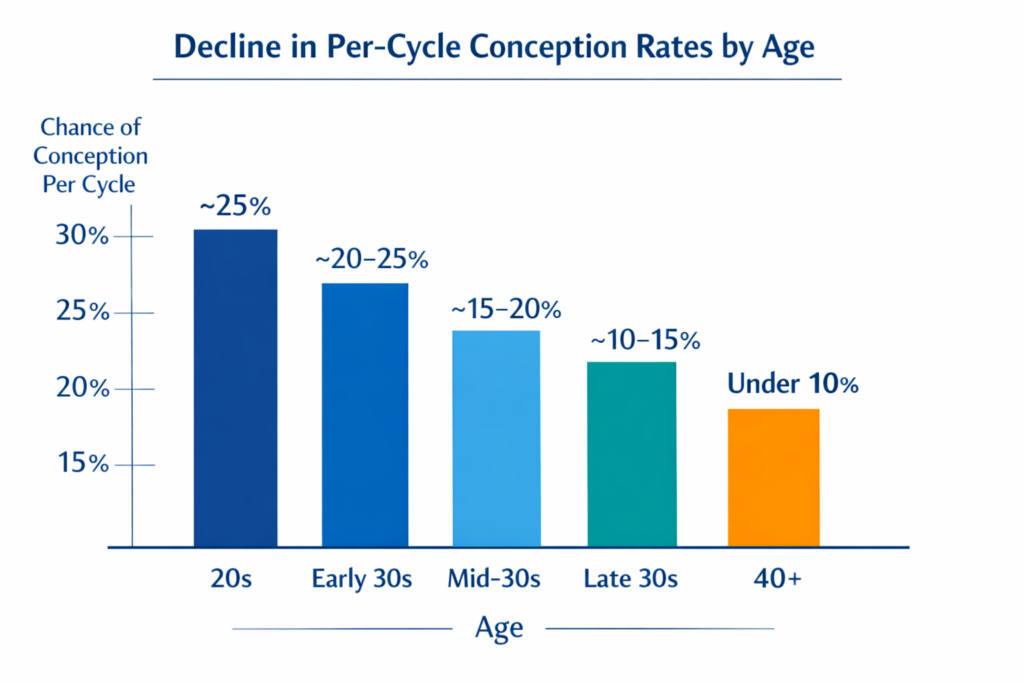
Even with ideal timing, your monthly odds of conceiving naturally shift with age. Here’s what the data shows8:
| Age | Approximate Chance Per Cycle | Within 12 Months |
|---|---|---|
| 20s (peak fertility) | ~25% | ~71% |
| Early 30s | ~20-25% | ~77% |
| Mid-30s (34-36) | ~15-20% | ~75% |
| Late 30s (37-39) | ~10-15% | ~67% |
| 40+ | Under 10% | Declining |
These are population-level averages. Individual experience varies.
The reassuring reality: most couples under 35 who time sex consistently through their fertile window will conceive within 12 months. After 35, it can take a bit longer — but plenty of women in their late 30s conceive naturally.
When to talk to a doctor:9
- Under 35: After 12 months of consistent trying with no pregnancy
- 35 or older: After 6 months
- Any age: If you have irregular cycles, PCOS, endometriosis, a history of miscarriage, or have other concerns — don’t wait the full year
Lifestyle Habits That Support Your Fertility
Timing is your biggest lever — but your daily habits also shape your body’s ability to conceive. A few evidence-backed changes that genuinely make a difference10:
- Start folic acid now – At least 400 mcg daily, ideally from a prenatal vitamin, should begin before you conceive — not after a positive test
- Maintain a healthy weight – A BMI that’s too high or too low can disrupt your hormones and interfere with ovulation
- Actively manage stress – Chronic stress elevates cortisol, which suppresses the hormones that trigger ovulation
- Limit alcohol and quit smoking – Both reduce egg quality and affect your cycle regularity
- Include your partner – Sperm count and motility matter too. Heavy alcohol use, smoking, and heat exposure (hot tubs, saunas) all reduce sperm quality

What to Do If You’re Not Getting Pregnant
If you’ve been carefully timing intercourse through your fertile window and haven’t conceived after several cycles, consider:
- Review your tracking method – Are you detecting the LH surge before it passes? Try testing twice daily during your fertile days
- Check your OPK technique – Avoid first-morning urine; test between 10 AM and 8 PM
- Rule out irregular ovulation – If your cycles vary significantly in length, you may not be ovulating consistently. Signs of ovulation you should not ignore can help you identify whether ovulation is happening at all
- Talk to your doctor – If you’ve been trying for 12 months (or 6 months at 35+), a fertility evaluation is the right next step
The Bottom Line
Getting the timing right is the single most impactful step you can take when trying to conceive. Here’s what matters most:
- Your fertile window is 6 days – the 5 before ovulation and ovulation day itself
- Your peak fertile days are 2 to 3 days before ovulation – timing sex before the egg releases is often more effective than waiting for the day
- Track with OPKs, cervical mucus, or BBT to identify when your window opens each cycle
- Have sex every 1 to 2 days through the window – consistent is better than perfectly timed
- Know when to seek help: under 35, try for 12 months; 35 or older, seek evaluation after 6 months
If you’re also thinking about lifestyle factors that can increase your chances of getting pregnant naturally, small consistent changes in diet, stress management, and sleep can support your body through this process.
You’re no longer guessing. You understand your cycle, know when your body is most fertile, and have a clear plan for what to do. The rest is showing up — and giving yourself grace through the process.
This article was reviewed for medical accuracy using sources from Johns Hopkins Medicine, Mayo Clinic, NHS UK, Cleveland Clinic, American Pregnancy Association, and Women’s Health.gov. Always consult your healthcare provider for personalized guidance about your fertility and reproductive health.
- Johns Hopkins Medicine. “Calculating Your Monthly Fertility Window.” https://www.hopkinsmedicine.org/health/wellness-and-prevention/calculating-your-monthly-fertility-window
- Medical News Today. “When Is the Best Time to Get Pregnant?” https://www.medicalnewstoday.com/articles/321314
- American Pregnancy Association. “Ovulation: Frequently Asked Questions.” https://americanpregnancy.org/getting-pregnant/understanding-ovulation/
- Mayo Clinic. “Getting pregnant.” https://www.mayoclinic.org/healthy-lifestyle/getting-pregnant/in-depth/how-to-get-pregnant/art-20047611
- NHS. “How can I tell when I’m ovulating?” https://www.nhs.uk/pregnancy/trying-for-a-baby/how-to-tell-when-youre-ovulating/
- Cleveland Clinic. “Ovulation: When Do I Ovulate?” https://my.clevelandclinic.org/health/articles/23418-ovulation
- Premom. “When to Start Testing with OPKs.” https://www.premom.com/blogs/fertility/when-to-start-ovulation-testing
- Natural Cycles. “Fertility by Age: What You Need to Know.” https://www.naturalcycles.com/en/cyclematters/fertility-by-age
- Women’s Health. “Trying to Conceive.” https://www.womenshealth.gov/pregnancy/you-get-pregnant/trying-conceive
- WebMD. “Fertility and Your Lifestyle.” https://www.webmd.com/baby/fertility-tips

![[variety of unsafe pregnancy foods including raw sushi deli meat soft cheese and raw eggs on a kitchen counter]](https://babiesparent.com/wp-content/uploads/2026/03/1_Unsafe_pregnancy_foods_202603301142-768x429.webp)